
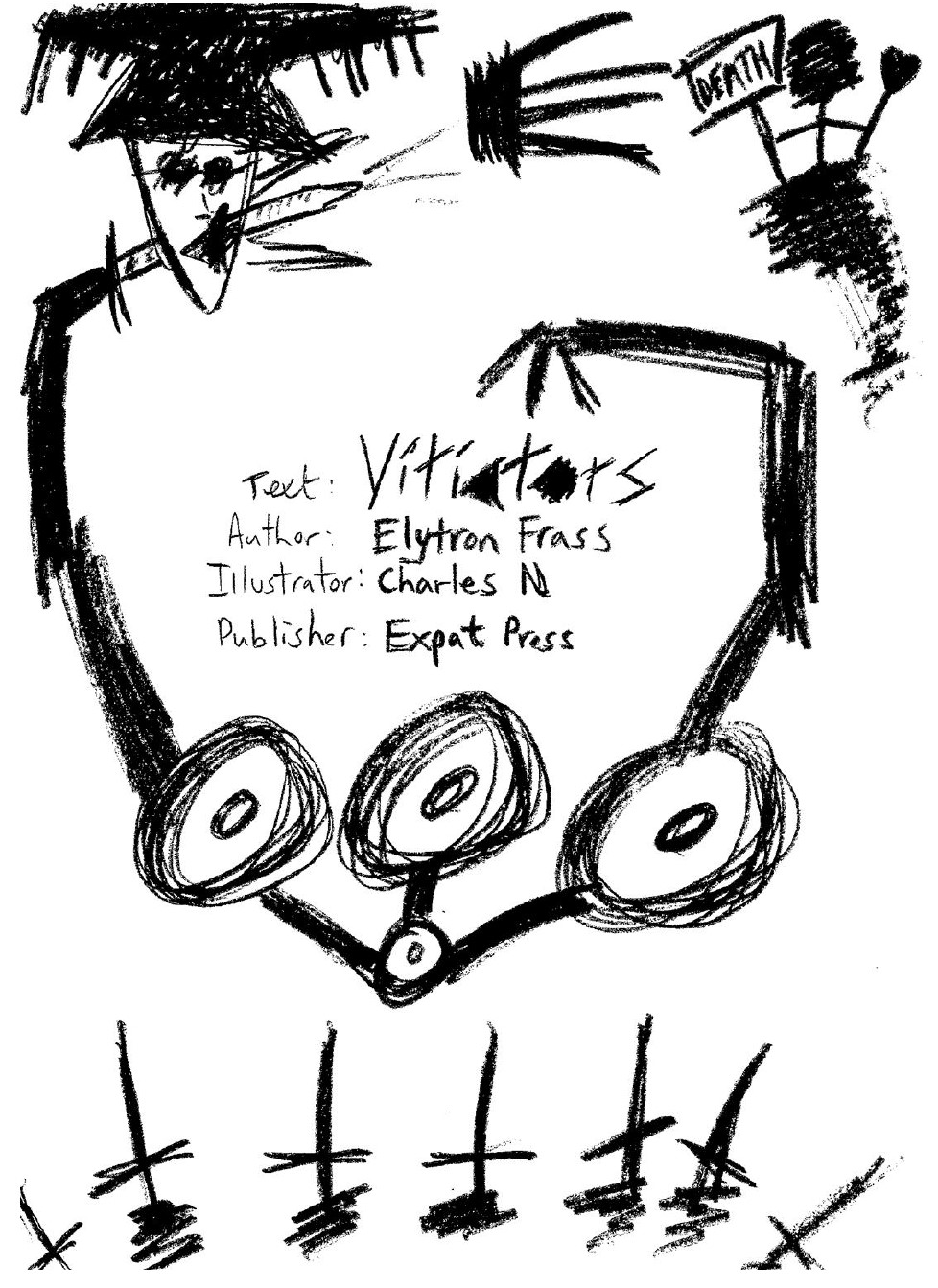
Reality and manga meld as one under the influence of Leibniz’s construction of a great baroque montage that moves between the lower floor, pierced by windows, and the upper floor, blind and closed, but also a grinding meta-feud between a once beloved mangaka and his outraged fanbase who are themselves gods miscreated via a musical salon that translates the visible movements below into sounds up above.
This is the synopsis of Vitiators, between the folds.
+
Vitiate is one of those words, like ablate or ablation, that I have to keep looking up. Not sure why.
It sounds very legal to me yet it is not.
Vitiate = to debase, corrupt, damage, destroy the moral or aesthetic status of something/someone.
So who exactly are the vitiators?
Am I [the reader] about to be vitiated?
Should I try and vitiate back do something about it?
+
A while back, there was a video on YouTube reviewing Vitiators, with the title being something like: ‘is this the most shocking manga ever written?’
Shocking or disturbing, or disgusting, one of the three.
Is it accurate?
As with Sea of Glass, I would argue that there is no shock in text or image anymore, if there ever was.
Shocking to who[m]?
When I was a teenager, I watched a video of a Chechnyan soldier having his head sawn off. Beyond that, there is no shock. Not in art. Unless it’s actually real or something happening to a small child. That’s why war photography hits so hard. This was something done to someone by someone else. Or in modern warfare, someone very far away, pushing a button like a fucking coward. Not that doing it up close is any less cowardly. The power ratio is still the same. Just ask the child murderers of the IDF.
Is Elytron attempting to shock?
I don’t believe so.
Vitiators is more than that.
It has to be.
+
I’m generally indifferent towards transgressive fiction, more so the type that fixates on murderers – what is their pathology, how do they think, how do they function day to day, what do they eat etc. – but I am a big fan of anarchists who shot at Captains of Industry at the tail end of the nineteenth century.
It all depends on what is being transgressed.
To be honest, I haven’t read a lot of transgressive work.
Or maybe I have and I didn’t realise it was transgressive.
Okay, I’ve just googled ‘transgressive fiction’ and it turns out I’ve read most of the list given e.g. William Burroughs, Fight Club, Filth, Kathy Acker, Coin Locker Babies, The Demon, Ballard, Lolita, Songs of Maldoror etc.
I enjoyed most of those.
Especially Maldoror and Acker [see my de-con-struc on Childlike Life of the Black Tarantula].
Not Burroughs though.
Soft Machine lost me in the first chapter.
Nova Express on the second page.
But the others are okay.
Guess the issue is that, for some reason, my brain mistook ‘transgressive’ for serial killer/closet psychopath narratives and I’m not really into that. Work like American Psycho or The Wasp Factory that tries to understand/explain them or follow them out of the closet. I just don’t care that much. Seems narrow, one note. Makes me depressed. I’d much rather read about anarchists or lunatic revolutionaries in 1930’s Spain or guys who attempt to push a steamship up and over a Peruvian hillside.
That kind of insanity.
+
Just dug a little more and found a list on Goodreads with 818 examples of what the list creator believes is transgressive literature. The first comments below argue over the inclusion of 1984, suggesting that it is a dystopia and therefore not transgressive as the protagonist is rebelling against the norms of a made-up society. The other commenter brings up Stalinist Russia.
I feel like what I wrote above is not enough, that I should correct some aspects of it.
The risk of transgressive fiction isn’t just that it can become tedious or over-psychologised[?], that is something I actually like, it’s that…to go into a singular, contumacious transgressive mind…and find that that mind is not in fact fully open to intrusion, that it is confessing, with confidence, only to what is “permissible” [inside that sub-genre] in order to divert from what is not e.g. 97% of all autofiction…
Confess everything and you’d have to kill yourself afterwards.
I think I wrote that once, about my old autofiction novella, Charcoal. A frustration or acceptance of the genre. Is the Id you? Should it be transcribed?
It cannot be.
Right?
But the transgressive mind must doubt itself, interrogate its thoughts, contradict its previous behaviour, pinball around like a fucking dervish.
Possible exemplar: In Hunger, the narrator, still within his own rage and self-disgust, helps out the homeless in Kristiania. Starves himself almost as a moral crusade. There is a hurricane of madness in this psyche, a state of almost quantum terror that the narrator himself does not understand, but tries to cos what else can you do with your own thoughts?
This is the transgression I’m drawn to.
+
Just checked my old university reading lists and apparently I did a module on transgressive literature in Year 2.
American Psycho, The Wasp Factory, Mysteries, The Bell Jar, Fight Club were all on the curriculum.
Can’t remember any of it.
Thought I read those books in Japan.
Didn’t I?
What is happening to my brain?
+
IS THIS THE MOST SHOCKING MANGA EVER?
IS THIS THE MOST DISGUSTING MANGA EVER?
Shock vs disgust…difference = ??
One leads inexorably to the other.
Is that it?
If someone in a film is stabbed in the eye, I will look away in disgust.
But that’s not shock.
I just don’t want to be stabbed in the eye. Or stab someone else in the eye. I don’t want to see something so jelly-like and vulnerable be penetrated.
But that feeling passes, if you’re confronted enough times by enough simulacrums wielding enough retractable blades.
There was a giallo I saw recently, can’t remember which one, where a victim gets a knife in the eye and I could watch it just fine.
The unreality barrier has shifted.
To cover all?
+
I don’t know how good this is gonna appear on a WordPress site, but I’ve decided to scan some of the pages from Vitiators and put them up here. It should look better than taking a pic, I think.
[Note: it did not look better, half of the scanned page was blurry, so I took pics with my phone instead]
Here’s page one, the thesis page:
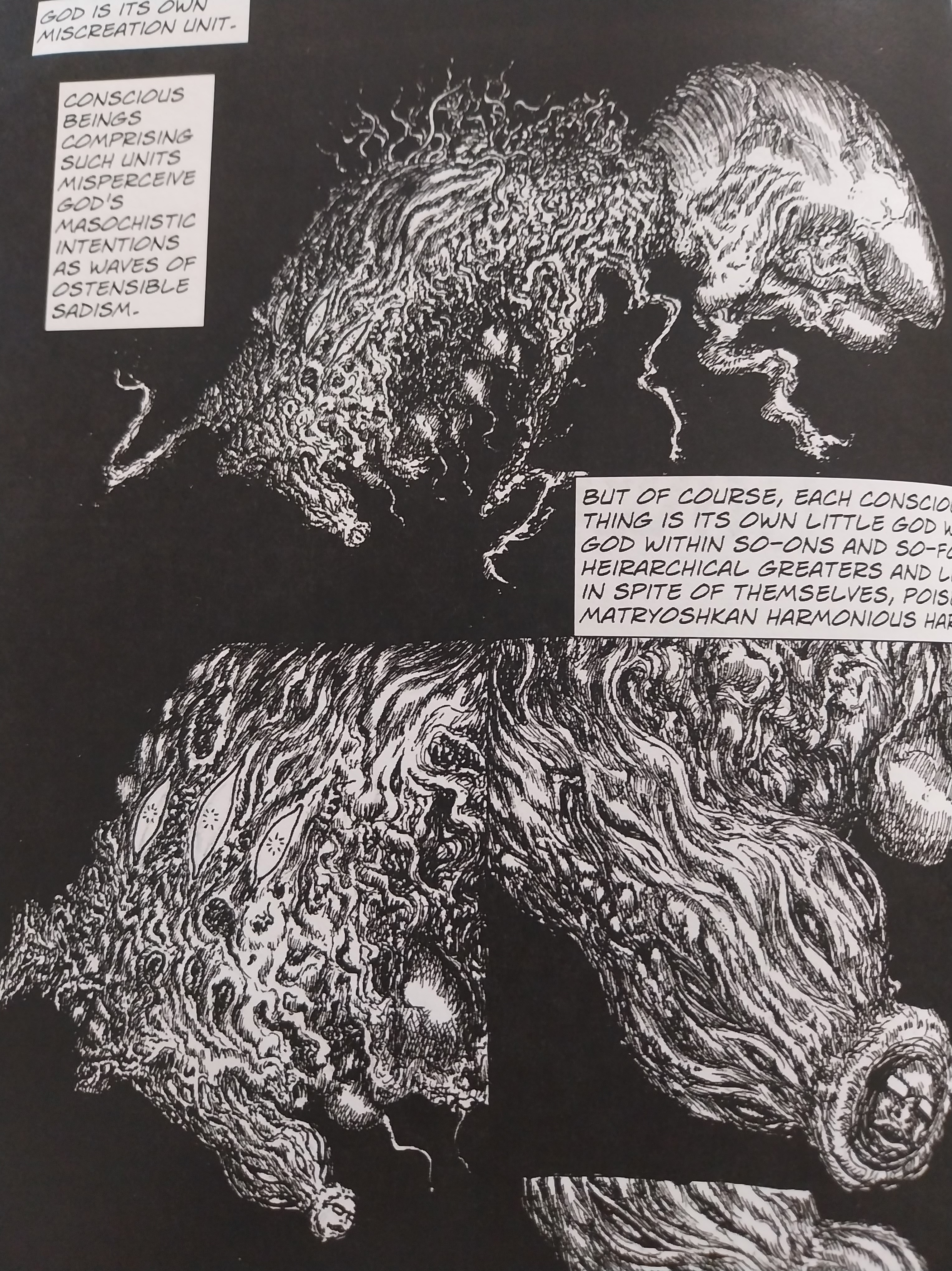
‘God is its own miscreation unit.’
First off, the god image looks like an alien rat foetus, not a faux-elderly, ripped white guy, which I think we can all appreciate.
It appears to be hanging latent in outer space.
We are the miscreation of god or god miscreated itself and we are the offshoot?
‘Masochistic intentions’ posits god as self-harming, self-destructive, other ‘self’ words. But there is no god, not an evidential one [look at the trees!]. We as humans, sociologically and anthropologically, created IT as HIM, which means we have a compulsion to hold something greater responsible for all the decay absorbing us?
‘Mandelbrot’ and ‘mise en abyme’ had to be looked up, of course.
My vocab is upper intermediate at best.
There was a piece about the HK film A Boxer’s Omen that Elytron wrote for the film dada series, and I had to ask him about some of the words in that too, mostly Buddhist-related.
As for Western esoterica or occultism, apart from a brief period about seven years ago, when I read books like Witchcraft in Pagan England and Icelandic Satanism from the local library [in preparation for a novel called Witch Kontolian that never got written], I have had little experience with it. I am not well positioned to write about this aspect, or understand the bulk of its terminology.
At times, the text in Vitiators can feel overwrought or redundant, and why not?
+
Spec: Vitiators is a work about the author as a god who has miscreated themselves, and the readers, operating as smaller gods, who have also miscreated themselves.
There are several layers to this, I think.
[I’ve just finished reading the whole manga and, yes, the opening page really is the thesis of the thing].
First, there is the author, Songeiko-San [or Sangeiko-San – there are numerous “typos” like this throughout, which leads me to think that they are intentional. In fact, I’m not sure, but it might just be certain in-manga fans who are mispronouncing the author’s name. That would be a nice little touch, if true. Creates a vibe of otherness that matches the unreality of the world we are pulled into about ten pages in. I did a similar thing in Void Galaxia, misspelling words [e.g. restaurrant, caffe, filmm] or adding extra letters at the end, to give the uncanny feel of a glitching simulacrum…that eventually alters the readers mind so the next time they see the word restaurant, they’ll feel it’s wrong somehow. Don’t know if it worked. Probably not].
Second, there is the fanbase, a small group of irritants that appears to be surrounded by hundreds of empty chairs and the River Styx.
Third, we have the substitute author, Prell, commissioned by the other fans to revise the latest work, Depravers, as he can draw and write the best.
I’m not gonna say that Elytron is Sangeiko-San, or who else represents what, it’s unnecessary.
You find your own place in the text [your own perversion?].
+
There is an interesting line from one of the super fans, when discussing their plan for revenge [against the author who has “failed” them]:
‘Are we cosplaying the cosplayers cosplaying the cryptorcultists?’
This is the meta part mentioned in the synopsis, which, if you read through to the end, becomes even more salient.
The fans, as written by Prell, stage a murder-suicide ritual in the mayor’s office, and exit the comic like so:

They’re taking their seats in the auditorium, basically.
They are the source-deviants.
Or like to think they are.
The question is: are they watching something that’s already been written, something that is about to be re-written by Prell, or something that is itself alive, violently so?
It’s a bit of a headfuck, especially when you get to the end [which I’ll talk about later, at the end].
Ostensibly, or as far as I can make out, Vitiators is a completed draft that Prell is revising as we read. Only he’s not. Sangeiko-san is. But he might not be either. He could be a greenbottle fly. Written in by Prell, who is revising this thing. But not really. Cos he needs to borrow a bowl from a shadow-form to make more substantial revisions. A shadow form that may in fact be Sangeiko-san. Or the Id of him. Which may just be an insertion written by Prell as a way to limit himself. Or to unconsciously ask for the author’s permission to continue. Or none of the above. It’s hard to explain. The author is dead. The art is alive. Prell is just one of the many plasticine gods at play here.
+
We get a brief scene with Sangeiko-San after the fan group discussion, and he seems to be in the deepest of deep ruts.
There is a loop of transgression and “the compromised state,” which he is trapped within, along with the fans that he loathes [and loathes that he bothers enough to loathe them].
At a loss on various levels [or bardos], he decides to ditch the ambiguous ending he originally wrote and, instead, pen an epilogue of definitives.
To be honest, I forgot about this scene when I got to the actual epilogue, but it all makes sense, enough sense to make it into a meta-headfuck. Don’t want to give away the whole plot. I’ll just say that…Vitiators…appears to be a live document. Or is trying to give the feeling of being a live document.
+
After this, the most shocking/disgusting/disturbing/sexy manga ever truly begins:

As you can see, the style of the drawing by Charles N. makes it difficult to see exactly what’s going on. Most of the deviancy/depravity is sketched in this manner. I assume it’s intentional as the more detailed, close-up drawings are excellently done.
Does it dilute the shock, to obscure the violence in this way?
Yeah, quite a lot. Not that there would be much shock anyway. But what you can grasp is the feeling that disgusting things are happening to the various kinds and types of people left in this embryonic Hell world called New Gehenna.
You, or I, just don’t get a visceral feeling of it.
There is no disgust cos it is not real.
Is this what the fanbase wants?
+
‘Cryptorschisphere’
Cryptor = crypto [hidden]
Chi = spirit energy
Sphere = word I struggle to pronounce
Is this a neologism?
+
The world has both ended and been forced to continue.
New religions/beliefs form almost instantly – a pair of dead Arab youths exhale their spirits, which are then reborn as greenbottle flies vowing to stop the vitiating faces from beyond i.e. the fanbase.
Why greenbottle flies?
No idea.
I’m uninterested in straining for symbolic meaning. If it’s to do with the occult, it’s probably beyond me. This comic is its own miscreation unit.
Note: Greenbottle flies are pests that feed on faeces, garbage, carrion etc. and are well know to spread various diseases like dysentery and salmonellosis to humans.
Ironic resistance to sicko threat?
+
What I really like in fiction is please fucking god surprise me.
A transcribing of the author’s psyche.
Maximum doubt.
Tangents everywhere.
Abyssal positivity.
Bleak progress.
Camping trips to the fringes of Hell.
Six second sex.
Biting off Alan Alda’s dick and slapping him with it.
Thaumaturgical surgery prep.
Exentera in-

The first character we follow in this new world cut off from the Sun and all the stars is a trans woman [a lot of the characters in Vitiators appear to be either gender-fluid or visually androgynous, which is a nice touch – anyone can be a sicko in New Gehenna if they want it enough] who wanders down an alley and pays someone to have her third eye drilled into.
She’s a Kastratsiya Junkie.
We do not follow her for long.
Cos she only ‘flirts with that which obliterates but would flee from an actual chance at annihilating themselves.’
Hi Bataille.
Hi Elytron?
Hi every single one of us not already dead?
The tone seems to be looking down on these types, but isn’t this every transgressor still here? Did Bataille rip off his shirt and charge at the Nazis when they invaded Paris, Jose Marti style?
Did he fuck.
[Note: have tried to search several times for what Bataille actually did in World War 2 and the last thing I found was a reddit thread about an alt history game called Red Flood that just says he wasn’t a fascist. A random biography says he left France in 1938, before the Nazi’s invaded. Willing to be corrected on this, if anyone knows?]
This is the risk of transgressive fiction [to me]…or a certain type of transgressive fiction…possibly the false idea of one in my head…it can come off as frustrated wish fulfilment, or a sociological experiment in Bataille’s case [the use of ‘sociological’ is generous here given his involvement with Acéphale], particularly if there’s no sincere reflection supporting it. Or spirituality? I’m not sure exactly what the right word is. There is a darkness within the psyche that operates in a state of constant variations, it is true, and-
Bataille didn’t really want to cut anyone’s head off.
He was all about mass expenditure.
Society has to be shocked by the occasional ejaculation of waste in order to continue peacefully.
He loved that heterogenous shit.
Vitiators loves it too.
There is a detachment to the presentation of depravity.
I don’t know what or who Elytron is.
It is a pseudonymous name.
He seems like a nice guy online.
Could be an elderly Austrian cannibal though.
Or a social worker.
Who knows?
Like Karina and her protagonist in Fourth Industrial Revolution Slut [I’ve thought about it, Elytron, and I think, yes, it might qualify as a transgressive text], it doesn’t really matter.
This is an interpretation of the text by me.
Filtered through my psyche.
Thesis [off my infinite supply of cuffs]: Vitiators is pure decay, inside and outside of us all. There is fatigue and boredom in reaction to the actualising of this decay. Disgust at the ones who gleefully partake, disgust at the victims for just sitting there and receiving it. Disgust at the reader for interpreting it?
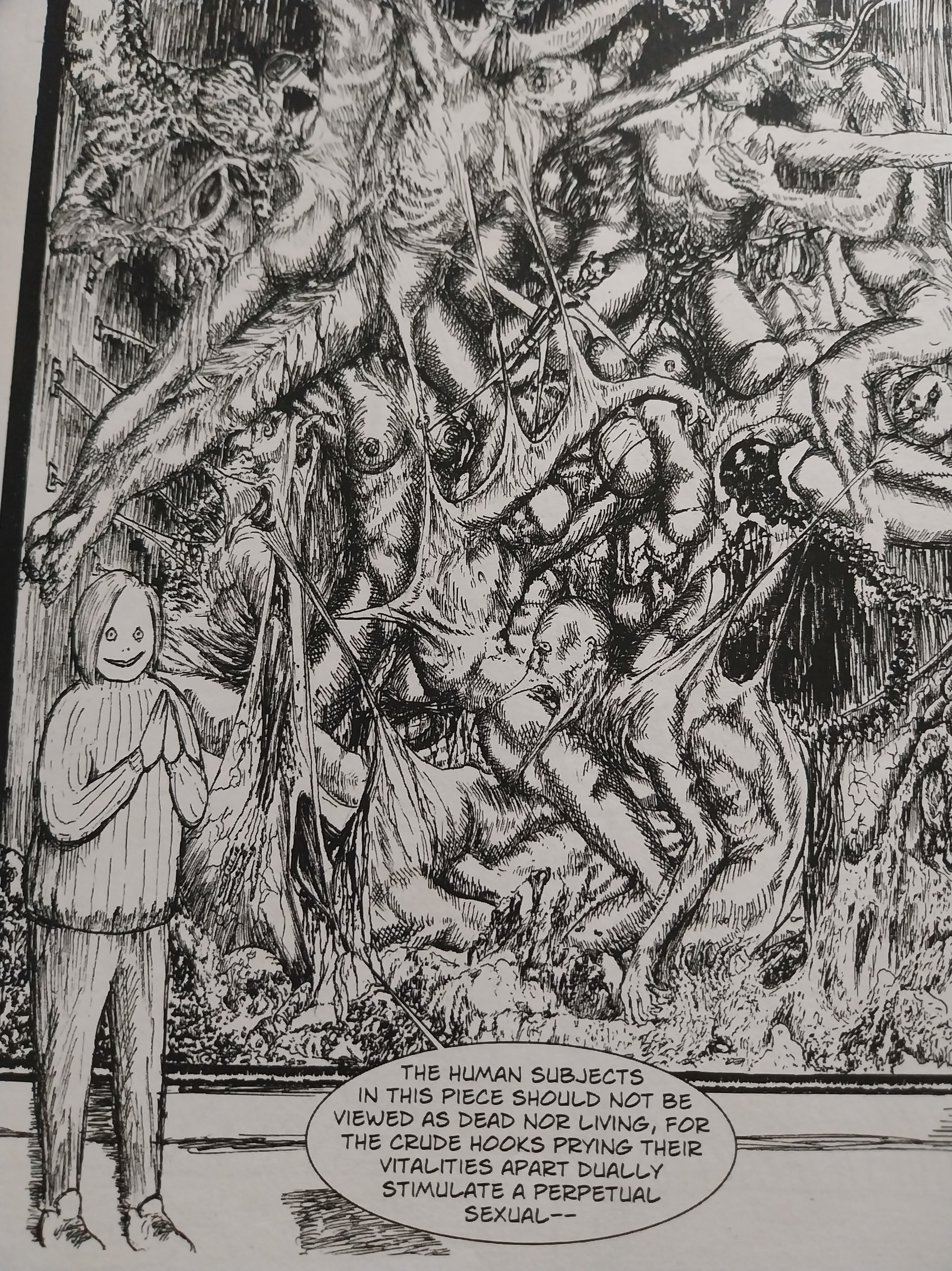
On to Frog Face.
I read this segment before, excerpted on an online lit site. This was the reason why I wanted to buy Vitiators when I had the money to spare. Easy to see why it was chosen as an excerpt, it’s quite short and self-contained.
Frog Face is the first character we see who has institutionalised their deviancy.
Made an institution of it.
A live-flesh gallery that Prell visits in the guise of someone who is not actively revising this work, which they are, which means it is no surprise that they act bored by everything displayed as art and, eventually, turn the tables on Frog Face by quadrisecting them.
It’s interesting, during the tour of Frog Face’s gallery, they talk about the four-way intersection of two related pairs: sex and death, beauty and grotesque, and we see exhibitions of people contorted into different angles and positions to express this idea, and it is the number four again when Frog Face is separated into quarter pieces, each one apart from the other, never to be intersected with anything.
This is true terror.
True annihilation?
+
The next section may or may not continue with this theme as a young girl called Annie is separated from her own soul. Well, she vomits it up after watching her mother become her own variation of Brundlefly. And then the soul rejects her. And she is left alone to fingerpaint with the blood of her recently dead parents. Who were deviants anyway. Mutated into some other form to properly reflect the monstrous bliss they felt inside. But then Annie sees her soul again in the form of an angelic dragonfly and pursues it as it murders the other parents in her building. The orphan-maker, she calls it. And still it wants nothing to do with her. So Annie remains separated from self. And in possession of Depravers, which comes to her from a bowl of cereal in a beauty salon where she is in line to be murdered by a lunatic hairdresser. With the book as her cheat sheet, she escapes and, through the murder of a disabled kid, confronts her soul again, begging to be reunited. But the soul is repulsed by her flawed sincerity and flies off into the mass of the lingering Cryptorchisphere.
What else would she have except flawed sincerity?
Why does her soul solely extinguish parents?
Is it beauty annihilating itself via the eradication of the grotesque?
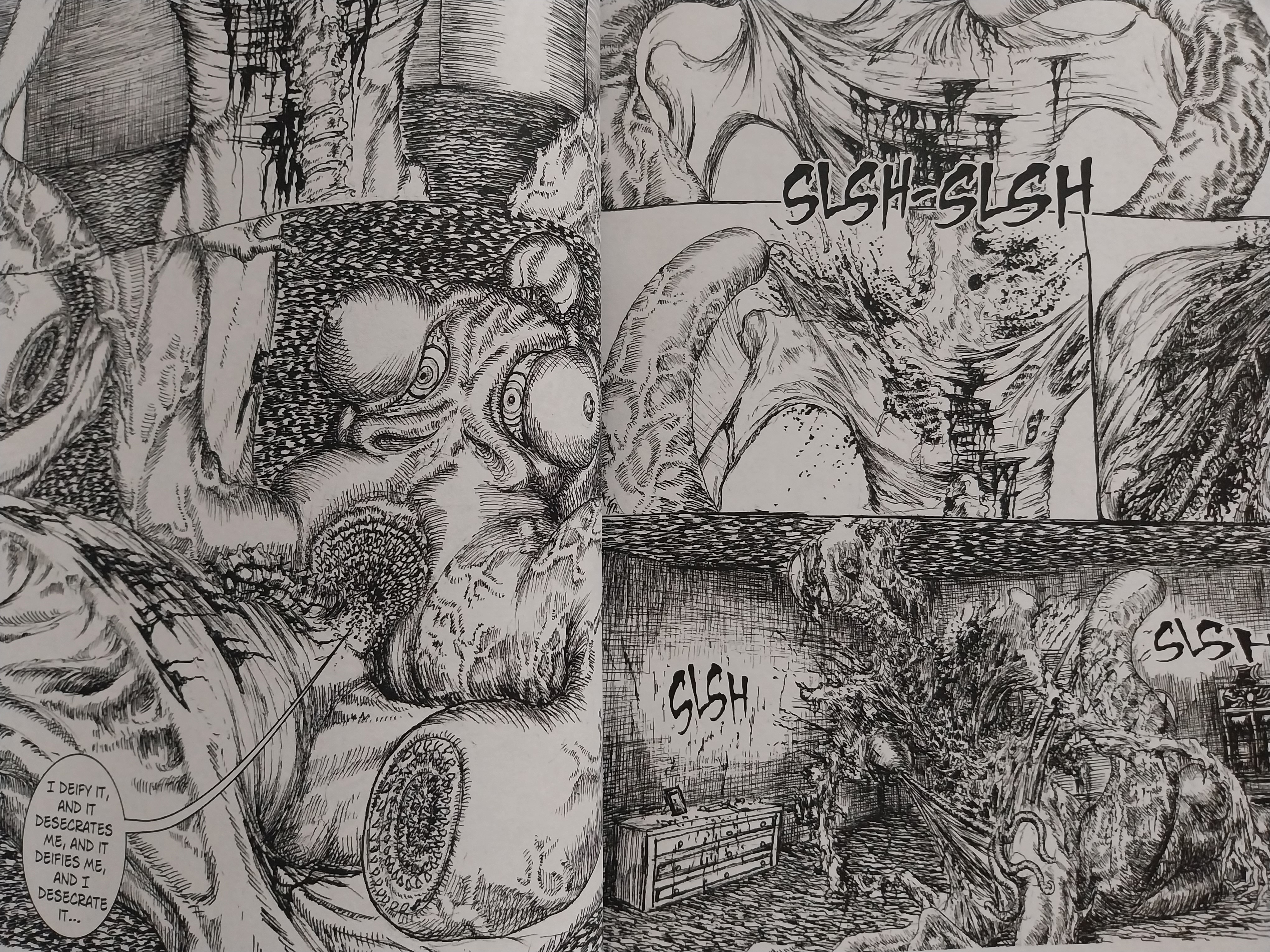
The beginning of the Annie section, with the parents death-fucking, started to make me feel tired/frustrated, just like Prell. I couldn’t really see what was happening in the drawings, I didn’t know these characters, I didn’t really care, everyone’s a vitiator, a deviant, there’s no ‘other’, no contrast, no counterpoint character, even one battling with their own deviancy. It’s just full acceleration into psycho-sexual excess and it can wear you down after a while.
I wouldn’t call it bored though.
Detached?
I don’t know.
Perhaps this kind of transgressive philosophy, whatever was being symbolised in the parents’ mutated fucking, is simply too far from what I’m interested in. There’s no psyche that I can detect reacting to this in a realistic way. And I just don’t get that much from viewing depravity, from characters that are soaking in it with absolute abandon. Feels niche somehow. Or not that. It has a place, a pathology to it. Might even by universal to an extent…unconsciously present, Bataille’s outer heterogeneity etc.
The world with its skin stripped off?
Maybe.
But that doesn’t have to mean disgust.
It’s all just atoms.
Blood, guts, gore, slime, mucus etc.
No transgression if everyone’s a transgressor.
Impure, imperative, doesn’t matter.
Where are all the social workers at?
+
Didn’t think of it before, but bringing in Bataille again [against my better judgment], how much of the violence/depravity shown is based in the imperative, and not just a continual expulsion of/immersion in the impure?
Frog face curated an exhibition to reflect, to conceptualise the depravity…is that an assertion of the imperative? Or an attempt at it, at least?
Art is the urge to express, to reach a higher form or state of being [and then self-sabotage so no one gets to read the thing].
We’re not there yet, but later, in the section called Dog Women, a guy follows something that could also be categorised as art [within the context of the new homogenous reality containing him].
Is this also an attempt at the imperative?
In Vitiators, it does not matter.
Ultimately.
+
I almost forgot this line.
‘I feel like 16 goin on 61’ [spoken by a skeletal wretch]
A bit of the levity that was promised. Greedily, I wish Elytron would lean into it more. Because I lean into it also. But then I would be Prell, forcing my revisions not onto the text but the author.
And it wouldn’t work.
The author is detached, tired of the limits of his own book/self.
That’s the feeling I get.
And decent humour can still come from that detachment, now and again.
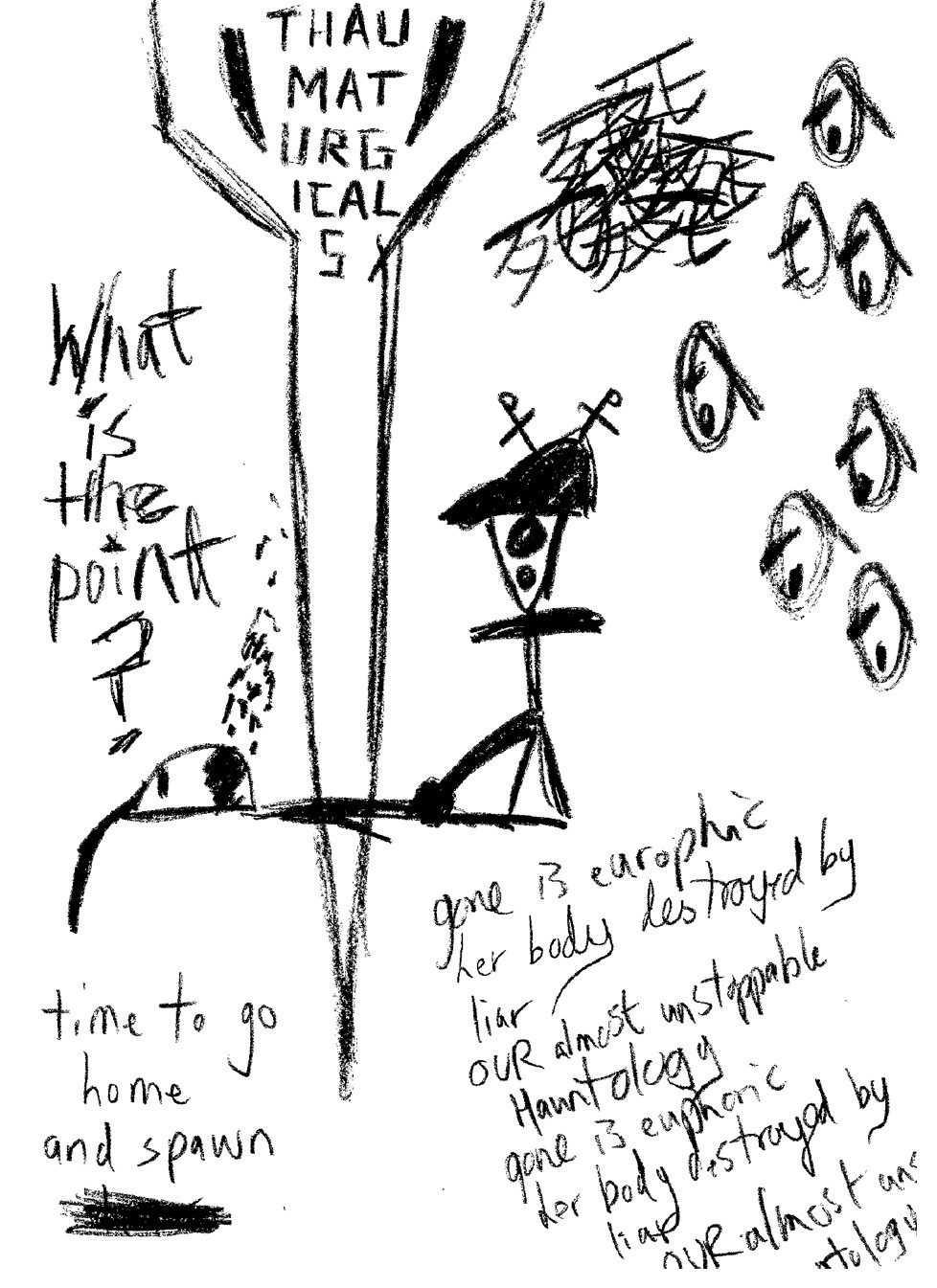
I took a break from writing this yet I’ve already finished reading Vitiators so now I’m sat here struggling to get back into the trance state that I need to be in to write these things.
It’s tough.
I want to be precise in what I’m saying.
But what was I saying?
+
As I’ve said in other De-con-struc pieces, I’m not a trained philosopher, no idea what Leibniz wrote about the baroque, but I’m gonna pull in The Fold//Deleuze cos I have a gut feeling it has a vein of connectivity with Vitiators.
Example, and bear with me: the Baroque House of Two floors – the upper floor being freestyle, weightless [the spiritual, the soul, the non-material etc.] and the lower floor bound to both mass, gravity and extrema [observable reality, base instincts etc.].
Within this house exist monads, each with differing qualities and positioning. I forget the exact hierarchy, but there is one…on three levels, I think. The lowest monad acts and reacts, the middle monad has memory and thoughts, and the higher monad can penetrate time and space without being detected or measured or fully comprehended. Of course, each superior monad is capable of the same things as its inferior and-
I’ve completely forgotten what the monads represent here.
People?
Subcultures?
This is gonna be quite hard to read, my notes are all over the place, brain is sludge, but…let’s call the monads people, or body-minds, or miscreation units, and like the author said at the beginning of Vitiators, each miscreation unit is its own little god with its own little universe that will mostly be identical to the universes of other miscreation units, with tweaks for filtered subjectivity, mental states, perversions etc., and, in normal practice, in the homogenous reality in which we currently exist, these miscreation units rise and fall in waves within the lower floor of the Baroque House. The influence or effect they have on the upper floor is debatable, but Deleuze, or maybe Leibniz, compares it to sounds of a melody drifting up through the ceiling.
Actually, I think in the original analogy, the two floors interacted only through the fixed, separate elements within e.g. monads/miscreation units, but in the Deleuze version, with the benefit of post-structuralism, the units themselves are variable, as is the terrain they operate in.
This is where the folds slide in. As well as the concept of com-possibles vs In-com-possibles. The idea that each monad expresses a world similar to the others [com-possibles] or different from the other [in-com-possibles] e.g. one lives in a world where Thatcher was a sinner, another lives in a world where she was a saint. The events or facts don’t necessarily change, but the expression or interpretation does.
Does that make sense?
I don’t know, I had it, I had the exact thing I wanted to say, but now…
The Fold is a tough book [that I’ve taken out from the library three times now]. When I first read the chapter that I’m referencing above, it really did seem so clear in my head, how to explain it, how to relate it to Vitiators, but now I’m not so sure. Same thing happens most times I try to wheel in a philosophy book to a De-con-struc. I get lost in the fog. And then I write it out here, the losing of myself in the fog, simply cos I’m trying to keep to the main concept of the De-con-struc, that this is a kind of living thing, that, at some point in reading Vitiators, the idea of including The Fold came to me and I knew precisely how to-

Rot Fatigue.
In the first few pages, the world of Vitiators changes in totality, not just from a com-possible world with a greater number of in-com-possible variables i.e. transgressors, but to a new type of com-possible world that absorbs both the lower and upper floor of the Baroque House and soaks it utterly in a blurred mass of decay and deviancy.
The upper floor too?
It’s all happening within the text itself, so maybe not. The non-material is more like the author’s personal quest, untouched because nothing that happens in New Gehenna is real in a transcendental sense.
Bodies are abused and violated everywhere, on every street corner, in every apartment, in every church, cos the sickos have taken over.
Sickos are all that we meet, all that we see.
Enough monads/miscreation units have grouped together to block out the sun and the stars, and now sickness must be the only visible thing in every single scene.
There is a gravitational force pulling all towards this new com-possible.
What is the point of page to page depravity?
Rot fatigue.
The same way you would expect to see people walking and talking on the street if you went outside now, in New Gehenna, you would find it weird if people weren’t mutilating and murdering each other.
On each page, with each character, it must be like this cos this is the world that is being expressed by the largest number of miscreation units.
Which, ironically, makes them quite bland.
And no longer the transgressors.
+
What does it mean when almost everyone is a sicko?
When the Baroque House has been spliced together and the lower floor [the body] has become dominant? Or the expulsion of heterogenous waste has formed its own planet?
Of course, sex and death go hand in hand in Vitiators.
Anything to do with the body that previously couldn’t be done outside a medieval dungeon, or an Ottoman dungeon, or a Ming Dynasty dungeon, or an ancient Sumerian dungeon, or an American dungeon, any dungeon really…is done in this book.
There are victims, but they either die in background agony or adapt to survive.
Co-ops are crushed by characters like Exentera [I’ll come back to her in a bit]
Is there still a spiritual element to this, if the upper floor has been invaded, colonised, confused?

The guy behind this dog women ‘make-over’ isn’t long for this world – he’s the one hanging off the door with a knife in his skull – and it’s not the first example of a distinct pathology in the book [Frog Face, Kastratsiya junkies, Annie’s parents], but it is the first to fuck with animals.
To be expected, I suppose.
Why would dogs be excluded from all this?
The interesting part is that this is the section, for me, where the rot fatigue I mentioned first started to seep in. I was also a little bit tired during the interlude with Annie’s parents, but that was more to do with the fact that I couldn’t clearly see what was happening in the drawings.
In Dog Women, I could see the detail well enough.
It was neither horrific nor disgusting.
When Exentera comes in and rapes the guy with the knife in his ass, I thought, is that all?
Could be down to the ‘no real horror’ in drawing/text I talked about earlier, but I think it’s more than that.
It is rot fatigue.
Which might be the dominant theme of the whole manga.
Must be.
I could almost predict what Exentera was going to do. The knife in the back of the skull to finish him off seemed as routine as someone saying ‘see you later’ to their friend in real life.
What else can you do to murder someone?
There are only so many ways.
In the mind of Sangeiko-san.
Or Prell.
Or Elytron.
And the splicing guy was a twat anyway.
I love dogs.
+
I’m trying to come up with horror films to compare to this to – for no real reason, cos I feel that I should, that it makes sense to do that – and the one that springs to mind is Videodrome.
But I haven’t seen that since I was a teenager, so I’ll go with Society instead.
Which I also haven’t seen for a long time.
Was that a Brian Yuzna film?
I think so.
[Note: just checked, it was his debut. And the “shunting” scene at the end was inspired by both his nightmares and a Dali painting called ‘The Great Masturbator’].
Could go with either Society or Videodrome to be honest, it doesn’t matter, the point would still be the same. In those universes, in that baroque house, the body horror is hidden beneath the skin of the homogenous world, and is only exposed [to the protagonist] as a transgressive force at the climax.
Same thing in The Wild Boys, which I was reminded of the other day when Elytron posted something online about that director’s new film.
The Wild Boys [who are played by female actors, possibly for practical reasons e.g. the dick shedding scenes] are caught between two monads [base + memory], two floors, two folds etc. They are deviant when alone, mildly deviant when together in a group with an adult nearby, but muted in crowded society scenes [which is just one scene at the start of the film, really]. Then, after their initial deviant act, they are chained up as dogs on the ship of the Captain, moving across an unfamiliar sea, before being washed up on a deserted island that turns them into women.
Note: the subtitles were in Spanish so I could only understand about 30% of the dialogue, which enhanced the watching experience in a weird way, but could also leave my analysis quite anaemic.
Anyway, the house [society] is never completely their own, despite being the progeny of wealth.
All the monads around them are expressing a world that is kept mostly at the fringes, its power felt by the way the wild boys alter themselves to fit its mould.
Until they reach the island.
But even that is run by an adult. And it is a temporary respite.
In Vitiators, the island becomes everywhere, everything, and in this place, the Wild Boys would be kings. Or queens. They could do whatever the fuck they wanted without pretence or subterfuge, fingerpaint with blood, bisect literature professors, fuck the soil, write poetry, and if they didn’t, if they just ate fruit and focused on the act of survival, they would be seen as abnormal.
Is their world that different?
Thinking about it a little more, I don’t know. There is a sense of a contained universe in The Wild Boys, same as Vitiators, that the five of them are always on the verge of breaking out from…yet they are also very unlikeable…so I didn’t really want them to break out. I wanted the Captain to beat and humiliate them. Especially the lead bully.
Is that bad for a transgressive piece of art?
I’m not well-versed enough [despite my murky university module], but it might be. I think it’s not just that they’re unlikeable, it’s the fact that they’re rich kids, which gives the transgression an artificial edge. Doesn’t feel like they’re compelled to do these things, only that they believe they can get away with it. Like those tycoons and their owl ceremonies, Arnie Hammer and his cannibal treehouse etc.
Make them poor kids and they’d be done for.
Straight into prison.
Unless they operated within their own little domain e.g. an alleyway, an abandoned factory, an arcade, somewhere outside of normal society confines, then they could also get away with it. At least for a short while. Long as they didn’t torture/kill a rich kid. Or even a middle class kid.
I don’t know, I just didn’t like them much. Viscerally. Wasn’t fascinated by their thoughts or actions the same way I am with someone like Humbert Humbert in Lolita or the nameless protagonist in Hunger. Their transgressions seemed cowardly somehow. Backed up by the group. Even the de facto leader, Jean Louis, the boldest of the five…wouldn’t make a move without the other boys behind him.
But still, it was transfixing.
Transgressive in its direction and cinematography.
And the soundtrack…I could put that on and let it play all the way through and not get bored for one second.
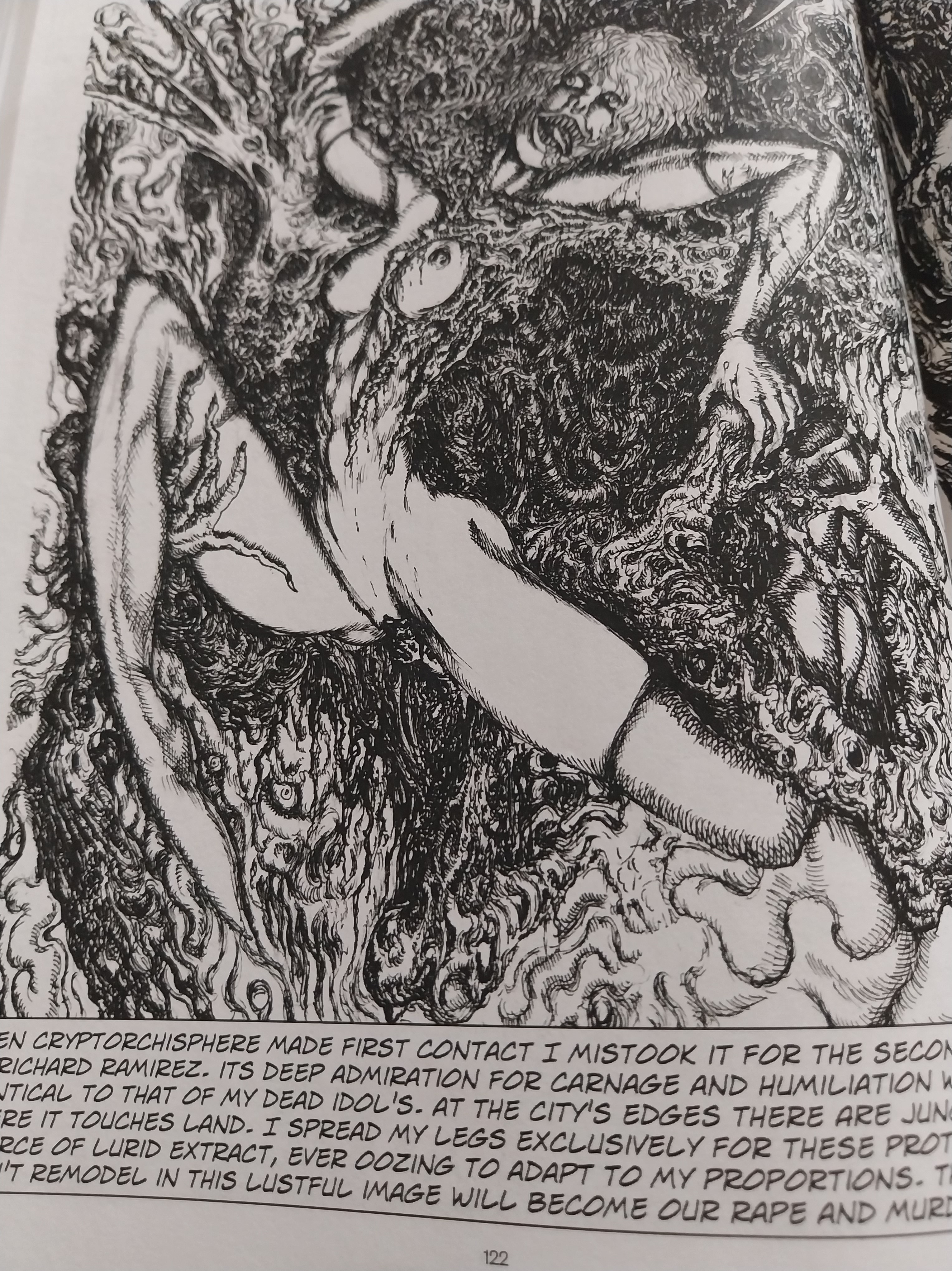
The only character I viscerally didn’t like in Vitiators was Exentera. Cos I got to know her more than the others and it turns out she’s anti-anarchist/communalist. Possibly the Id analogue of a weird libertarian.
Not really ‘didn’t like’ her, just thought, ‘you little cunt,’ when she boasted about ripping apart co-ops and communes.
‘Enjoyed hating’ might be a better way of putting it.
Why such loathing?
I don’t like people or groups much, or other writers, but, deep under my veins, I am an anarcho-communist. Though not a utopian. Read Planet Rasputin and you’ll know that. There are aspects of Vitiators that I relate to on a philosophical level but the character of Exentera is not one of them. She is especially pathetic. She interprets the Cryptorchisphere as an idol, something to worship. As every sicko does. There is no relationship to her as an individual monad and she is not transgressing anything as transgression has become the norm in the new universe. I despise her smallness, her brazen solipsism. I appreciate that she is allowed to make her case. I admire the passion. But it is Prell making that case. Prell who is not the true author, merely the revisionist.
+
Is this the US de-skinned? I’m not American, I have no idea. Just forced to watch the show like the rest of the world.

The Byron Gunmetal Factory.
Again, the drawings are unclear, which makes everything very difficult to make out – I think it’s entrails and metal for the most part – and, ultimately, it doesn’t matter cos this is just Exentera pissing about in a subplot that will not be allowed to go anywhere.
Would this be unfilmable?
Tetsuo managed it in 1989 so probably not.
+
Of course Exentera would kill off her trainees. She’s anti-group, how did they not see that coming?
Cos of their particular pathology.
Even in a collapsed house where perversion rules, they still fall into a hierarchy that could be construed as ‘please, master, give me permission to do such things.’
Or it could be the taking on of a master that you can later usurp and eviscerate? Similar to the murder of a parent. Or any authority figure.
Didn’t work out too well for the trainees.
+
PERMISSION
All characters in Vitiators are still – unconsciously maybe – seeking permission.
From a superior monad above/beyond.
Exentera could be an exception to this. She acts as a type of caretaker to the new world, protecting its monstrous state. A player who believes she has been given permission to do so.
Until she meets the higher caretaker, Prell, a remembering monad.
Who goads her with his superiority.
But he’s not a caretaker either.
And did he not require permission from the others before starting on his revisions?
I don’t think he asked Sangeiko-san.
He couldn’t.
Guy was already dead.
+
Is this the revenge of the author? Sangeiko-san or Prell? Or a fan group tearing itself apart [Lisa]? Perhaps the latter as Prell pops up and says pretty much what I was thinking at the time, ‘this subplot has grown stale, time for revision inserts.’ Only he says it quite violently, smugly, to a battered Exentera, who represents what exactly?
Note: the author no longer cares.
+
‘Matrix, patrix, latex…’
A lot of the abused victims, and vitiators, have mantras that they repeat incessantly. Exentera mocks them for this despite herself also expressing spiritual beliefs in her own fashion.
It turns out that repeating mantras is a way of keeping their monstrous bliss i.e. their current state of vitiation.
This implies that this state of monstrous bliss is temporary.
Or they believe it to be temporary.
The transgressor unable to accept that their expressed transgression can be objectively real or sustained as such, that whatever superior monad existent on the upper floor would truly let them get away with it.
You could also rope in body-mind satisfaction.
To have been given the keys to everything and to remain dissatisfied [unsatisfied?] even in a state of total satisfaction.
Is that why Prell keeps revising?
Why Sangeiko-san wants out?
+
I always wonder what it’s like, the feeling when you release a book that you put so much effort into and then get a reaction that is just nice book and nothing else, or sickest shit ever and nothing else.
Reviews that don’t really say anything.
Is this community?
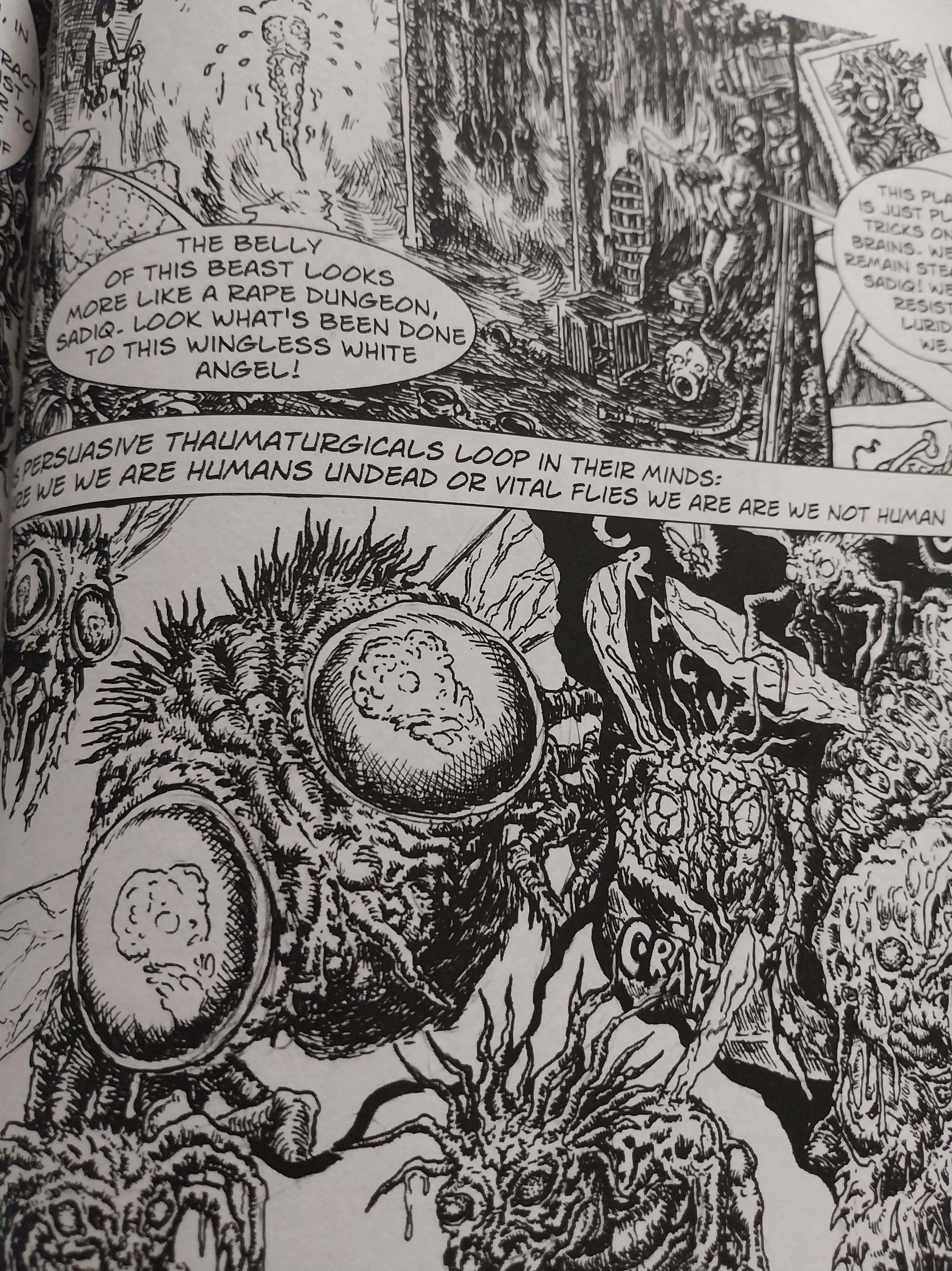
‘The belly of this beast looks more like a rape dungeon, Sadiq.’
Another funny line.
From a greenbottle fly of all things.
‘What’s the point of shielding evil from evil?’
Exactly.
New Gehenna is not a mass of individuals, it is something else, a mass of the already consumed individualised. The sickos won early, as soon as the bell rang, which they later maimed and destroyed.
The greenbottle flies get absorbed into the mass and come out reborn. Are they though? Isn’t that just what they tell themselves so as to continue their goals?
+
I saw one of those word clouds online, with different branches of philosophy written out as text constructs, none in contact with the other. So we can see clearly what each one says, I guess.
In Vitiators, the word cloud is a blur, as are the drawings, all constructs or monads forced into the mass/extrema. Any character that is individualised – Dog women guy, Exentera, her trainees, Prell, Sangeiko-san? – eventually gets absorbed into the mass too, their perversions either extinguished or added to the pyre.
I think that’s accurate.
Technically, Sangeiko-san just sublimates/dissipates into ash, leaving his art behind to be dealt with by Prell and the fanbase.
Or given the illusion of being dealt with.
I’m not a hundred per cent sure, meta-work always gives me a migraine, but it seems that the whole story of Prell revising the found manga is the actual story that Sangeiko-san wrote, with Pubes continuing the loop at the end by finding the manga again after the author has faded into ash. And the author is reborn symbolically as the greenbottle flies trying to break through the confines of the last page, searching for something beyond the original miscreation unit. Or whatever lies past the upper floor.
Is this right, Elytron?
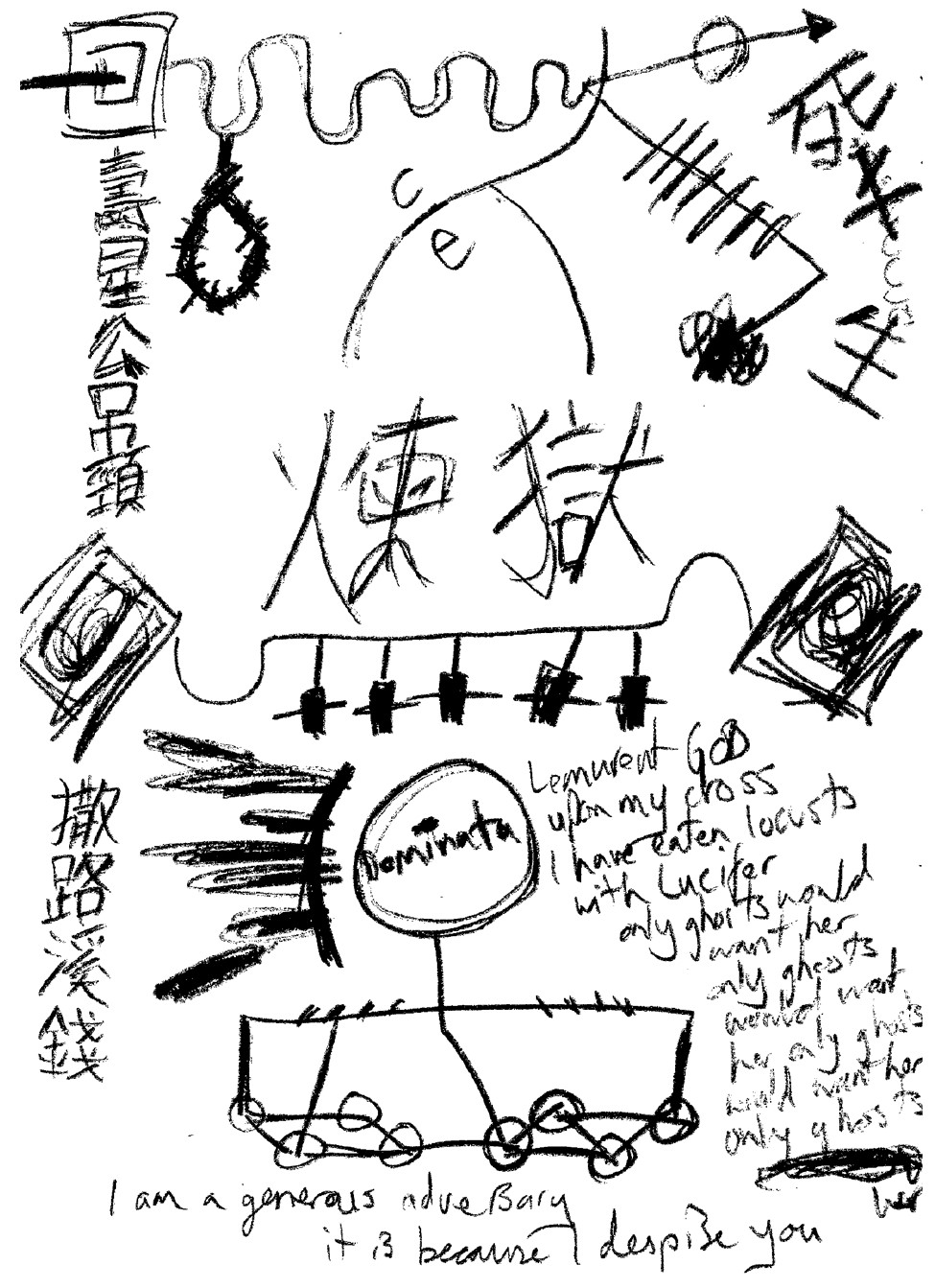
Vitiators goes at its own pace, along its own routes.
What is the point of it?
Disgust at the world as it is?
Disgust at those disgusted with it?
Self-disgust?
A distancing from that disgust, like Sangeiko-san?
Joy at the revenge of the object, the base monad?

The unknown reader is also an interpretation/perception. God really is its own miscreation unit. Can argue with and/or eviscerate itself for all eternity but will still be trapped inside its own expression.
‘The mind is obscure, the depths of the mind are dark, and this dark nature is what explains and requires a body.’
I like this quote [from The Fold, not Vitiators].
Not sure if I agree with it though.

Debt of the author.
In debt to a superior monad, conjured up by their own desire to ascend. Ascend to the upper floor. Drag it down to the bottom, mass, gravity and extrema. Penetrate the roof. Outside is the nuance of Exentera. The humility of Prell. Another fucking fan group, only this one just says, ‘what?’ Vitiators on Crunchyroll, Annie the anti-hero annex to Orphan-maker and the greenbottle flies. Identicals are a class of beings but a class with one sexy member. I must have a body because an obscure object simulcasts inside me. It is dark under the veins. This grave is an exit. Everything is ordinary. Every thing is unique. Captain should’ve tied them up again. These are remembering monads. With one black tit. It’s soft and abysmal in these folds.
Makes sense in the trance state.
Ne?
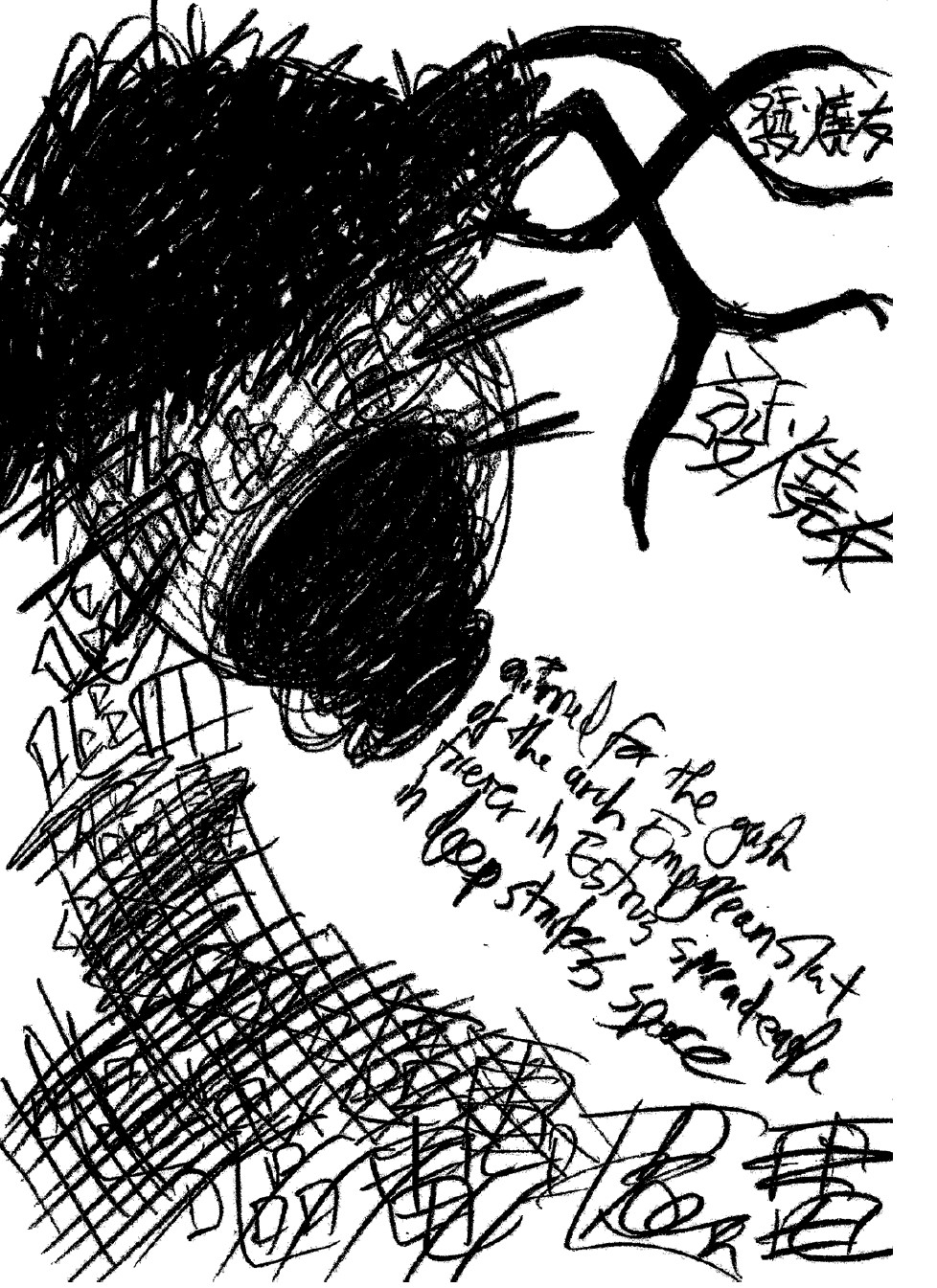
In a monad-to-monad sense, Vitiators is inspiring.
Not mimetic.
I’m incapable of writing the same way as Elytron [like Prell], don’t know nearly enough esoterica or occultism.
Only half interested in depravity, perversion etc.
I do not desire to write Vitiators 2 or Depravers or New Gehenna: the later years.
It’s not me.
But the same way I look at a painting like Black Square or Witch Going To The Sabbath, or endure those irritating teenagers in The Wild Boys, it provokes something, opens a part of me up a little bit more.
Says, ‘you can go further, in your own way, with your own insanities.’
Hence the black scrawl shit of Perma Neon O and Deeper Red [on its way to Hell]
Both completely Prell-proof.
I think.
+
I’ve re-read the last twenty pages or so, and I’m still not really sure what’s going on.
Is it a Matryoshka-type loop, diluted via each revision?
Or the ambiguity that Sangeiko-san claimed at the beginning, in the original draft that got released and criticised?
Does it matter?
+
YOU
can buy Vitiators here, and you should, it’s well worth it.
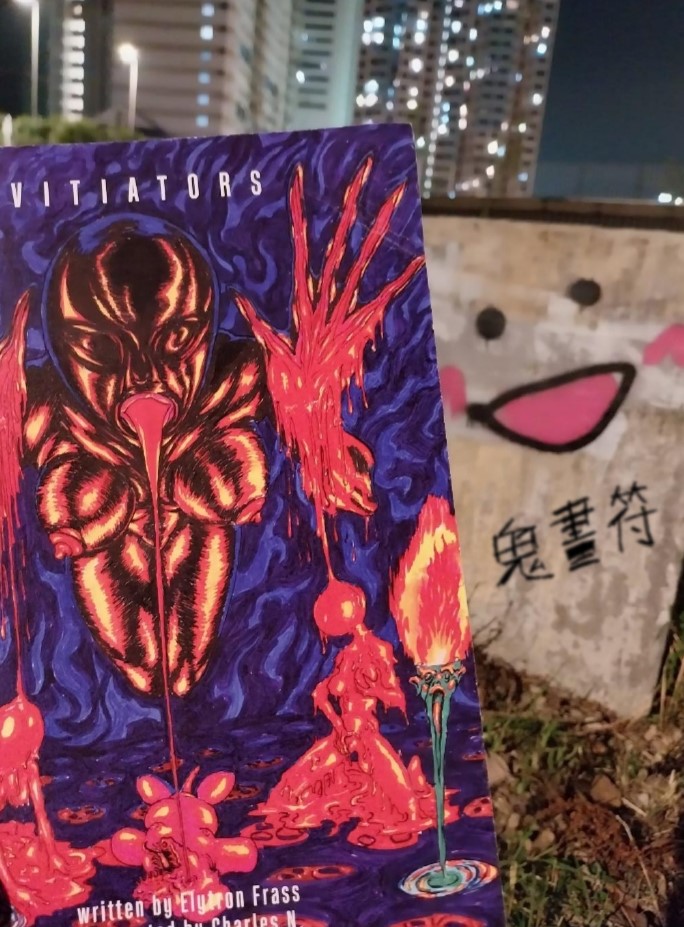
 PsYChO hOLosUitE [zine]
2 thoughts on “[De-Con-Struc] Vitiators // Elytron Frass [Illustrated by Charles N.]”