+
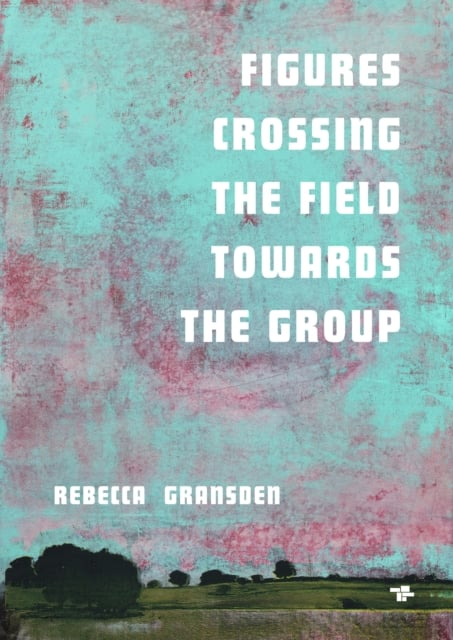
Text: Figures Crossing The Field Towards The Group
Author: Rebecca Gransden
Publisher: Tangerine Press
Plot: Fig ures stuck in one sound pris on cross the fi eld to wards the group but what group where at will bro be there al so?
Sub plot: The toads try to raise the bridge, the red ants make a run on the Win ter Pal ace. Or vice vers a.
+
The blurb [or one of the reviews [or Rebecca herself?]] mentioned that this whole narrative is chained to the conceit of all words being one syllable only. A conceit cos language stems from a series of grunts, groans, whimpers, shrieks, dude etc. and this wants to evoke that kind of regressive simplicity?
Or perhaps a general apocalypse vibe?
+
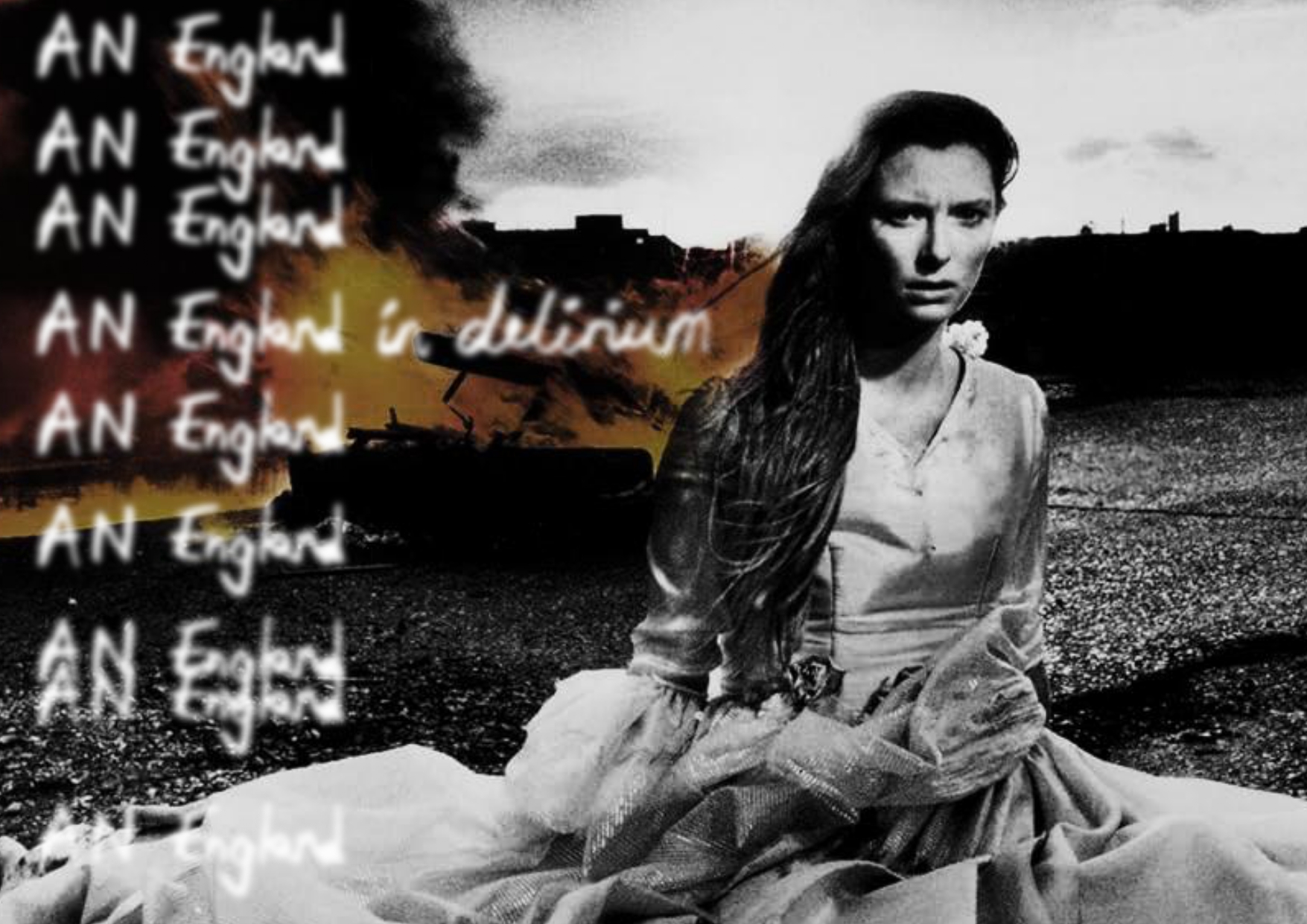
Actual plot [given by the book itself]: A pilgrimage. An England in Delirium.
I hope this is not a topical reaction to the riots in the news a couple years back, but a general, oppressive feeling that England is at its core an insane asylum of a nation trapped by right wing media and right wing interpretations of history and right wing everything.
Or just a riff on J. G. Ballard?
I say this cos I did a de-con-struc of Sea of Glass two years ago [also by Rebecca], and Ballard popped up a lot there too, even though I’ve never read High Rise.
I did read Vermillion Sands recently, and have already done a de-con-struc of it, with a weird tangent/rant about Ballard milking or not milking his internment in the Shanghai Posh Kids Play Area during WW2.
Sea of Glass was decent, and quite similar to Figures in some ways. It took me several attempts to get past the first 2-3 pages cos it’s not the type of writing I usually go for, but, as I’ve learnt doing all these de-con-strucs, you have to give a book more than the first 2-3 pages, especially with experimental stuff. If I didn’t learn this, I’d still be reading The Worst Witch and Red Dwarf tie-in novels.
+
+
Back to Figures.
Of course, I’m gonna try and mimic the 1 syllable conceit here, I can’t help myself. Only know that when I start doing that, there’s nothing behind it, no depth.
And I may give up if it gives me a migraine.
+
Just checked and the whole text is around 70 pages long. Makes sense. Reading this kind of experimentalism can lose the reader if it’s dragged out too far. Like reading a 1200 page novel of ultra-clipped, single clause sentences. It would drive you insane. I did write Charcoal, which was mostly alienated single lines, and that was around 100 pages. Any more than that, 200 or 300, and it would’ve died fast.
+
I just remembered, I did a preview or speculation on Figures before. I think I compared it to A Field In England cos it also has ‘field’ in the title. And that the whole text would literally take place in a field, possibly an occultish, supernatural one.
+
Okay, here’s the spec I wrote 2 years ago [it’s not that long]:
+
Plot spec: A lone figure starts the story, wandering into a field, searching for a group that they’ve heard can help them in some way. Inside the field, they meet other figures, maybe two or three [not too many cos then dialogue scenes become awkward/difficult]. Soon enough, strange things begin happening in the field. The group is not where it said it would be. One figure bonds with the field on a psychic level and attempts to woo the others to its side. Slowly, they acquiesce, except one who must be sacrificed. Finally, they abandon their search for the group and make a perimeter around the field, fortifying it with sharpened tree branches. When done, they erect a sign that says, ‘welcome to those who are figures, please explain yourself.’
+
Yeah, all in one field, with a nebulous, space-time shifting group.
Looking at the contents page, I feel that I was an idiot and the ‘field’ in the title is clearly figurative…a representation of England itself perhaps?
Figures = individualism/solipsism
Group = collectivism
Theme: the impossible English journey to a version of Communism, or the depressingly more likely journey to shock-gammon fascism, or the spiritual journey to go back to a primitive mode of collectivism that can no longer be located.
+
I’m tired of speculating, let’s just cross over.
If I’m being pedantic, ‘contents’ is 2 syllables [ 3 if you speak like an ESL teacher].
Wait, the chapter titles aren’t all 1 syllable either.
I guess the conceit hasn’t begun yet.
Pedantic for the loss.
+
+
CHAPTER 1: THE WAY OF SALT AND SIN
+
Not sure if there is a link there. Salt and Sin? Salt is a key thing to keep food good [this one sy lla ble thing is tough], is of use in war fair when one side keeps it from the side they do not like. Sin is in the mouth of those who speak, their one fix view of it.
+
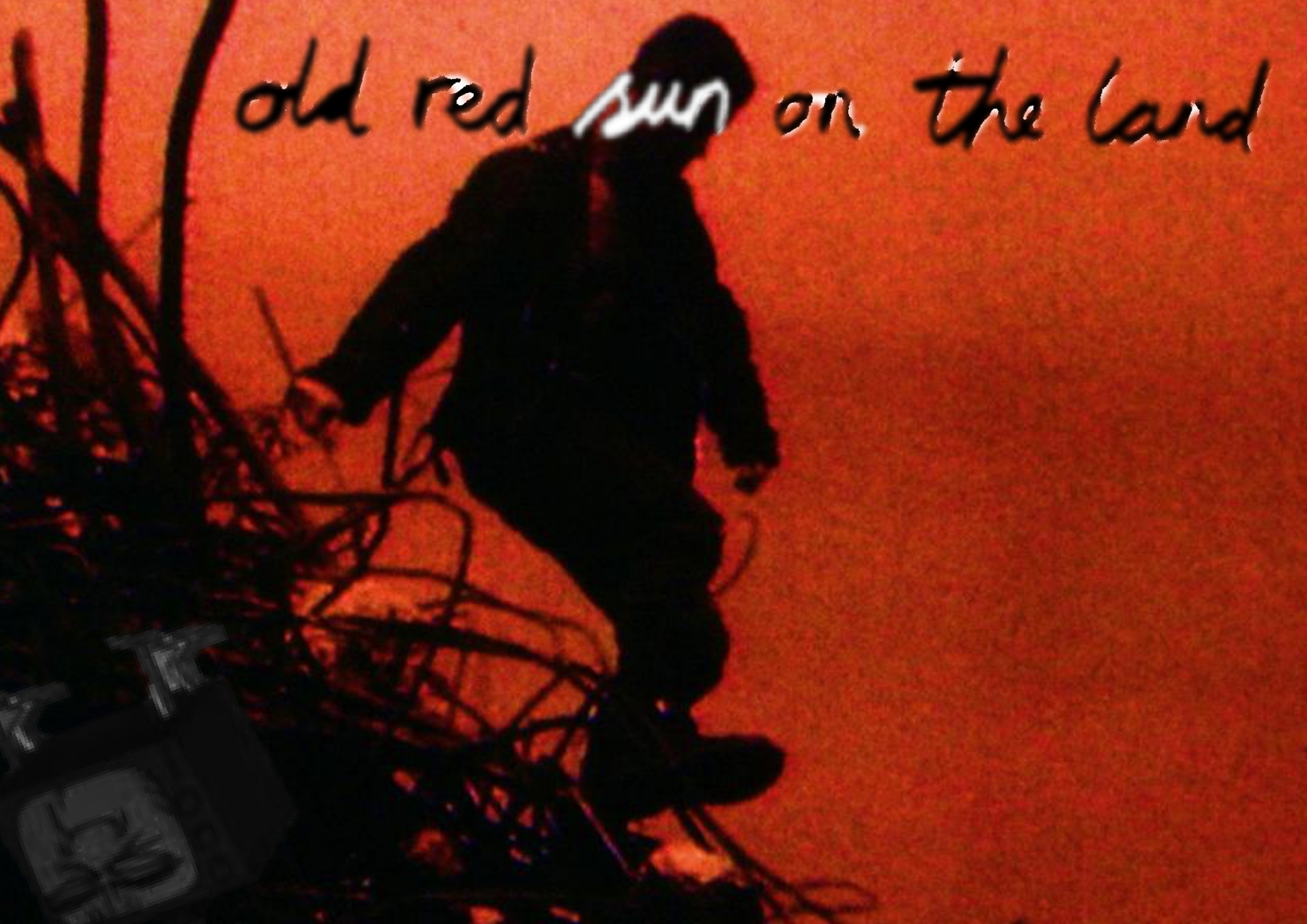
‘And the old red sun on the land. A slow wind stalks the brush. When the tide out at sea waits to run in green.’
+
Red sun in the U K? Must be some thing ab norm go in on.
These are the first three lines of the text. The sun, the wind and the sea [with the tide as hand] are there, not still, not dead, but set on hex like things to ward the Earth.
Okay, this is painful, I’m abandoning the one syllable nightmare. I can’t do it. I want to say that the sun, wind and sea are alive and actively forcing themselves on the land, as they would in any good mythological tale.
This sets a standard, I suppose. The human characters, the figures, the group too perhaps, will have no real control over anything. They are at the mercy of the elements/mythology. Will they try to diminish it like Herzog did in Fitzcarraldo/Aguirre? Battle against their own smallness?
+
‘On a high coast a lone girl sits and thinks of a boy and the push that sent him down to the rocks.’
+
She pushed him?
Or witnessed someone else do it?
A sacrifice?
In their own way, the humans are forcing themselves on the land too, only a boy splattered gainst the rocks doesn’t affect much of anything geologically.
Fracking/deforestation does though.
Motherfuckers.
+
‘A mass of gulls dive to death fish stare where the coin glint of scale aims low.’
+
No idea what this means – the fish give a frozen look before being plucked from the sea?? – but ‘dive to death fish stare where’ is quietly beautiful. Slight alliteration with 2 ‘d’s and 3 digraphs, the ‘th’ + ‘sh’ at the end of their words and the ‘st’ at the start of stare. It works nicely together. ‘Coin glint of scale’ is confusing. The fish scales? Actual coins thrown into the sea by superstitious types?
It’s probably not supposed to be understood in this way. Feels like it’s more about the lyricism and vibes. The juxtaposition of human + nature + animals e.g. the boy pushed onto the rocks [in memory glaze] followed by the gulls diving down the same drop for their breakfast. Both ending in death, only in the second case the descender is delivering it.
Actually, that extract could be [purposefully] missing a comma, making it: ‘A mass of gulls dive to death, fish stare where the coin glint of scale aims low.’ – the gulls dive down while the fish stare down at the light bouncing off their own scales??
It makes more sense that way. Are all the commas missing throughout the text? In only the descriptive parts?
No, I’ve looked ahead a few pages and there are commas, lots of them.
I think the with a comma reading of this particular line is correct, but can’t guarantee it.
+
I wonder if all this is from Rebecca’s imagination or one of the 100,000,000 movies she’s seen over the years. Or perhaps a cliffside experience she had when young. Or one of the above three reconfigured into-
+
I’m not gonna go through each line of each chapter as forensically as I’m doing now. I just wanted to get an early feel for what I’m reading here.
+
‘A mass of gulls dive…’
Should this be ‘dives’, if the collective noun is ‘mass.’
I’m not sure.
[I checked and in British English it can be singular or plural depending on mood/context/mushroom intake – I think ‘dive’ does work better melodically as ‘dives’ would clash with the plural of ‘gulls.’ I think some other plurals are altered for the same reason, though I can’t think of any examples off the top of my head].
[Also, ‘mass’ is tricky as it doesn’t feel organised or structured like ‘team’ or ‘group’ or, in the case of birds, ‘flock’ – it’s more akin to a description of congealed lunacy [from the POV of the one describing, not the gull itself, for which it is normal].
+
‘A lone girl on a high cliff hangs knees up to chalk, salt drips in her grass hair.’
+
A lone girl?
Assuming it’s the same one as three sentences earlier, it should now be ‘THE lone girl’, which means this character [and maybe other ones] will be denied definition.
‘The Field’ in the book title is definite.
‘Figures’, pluralised.
‘The Group’, definitively collectivised.
Let’s see where this goes.
Gut theory: people are transient, small gainst the definite, longer-living elements/cosmic fuzz.
+
‘A train of sun light touch the muse, a mist boy falls to hell she thinks.’
+
Okay, here’s an example of doctored plurals [that I failed to give above]: ‘touch’ should be ‘touches’. But that would be two syllables. Grammar is off slightly in this version of England. It’s fine.
The words are a bit off too, a mutated version of English, future or past?
Examples:
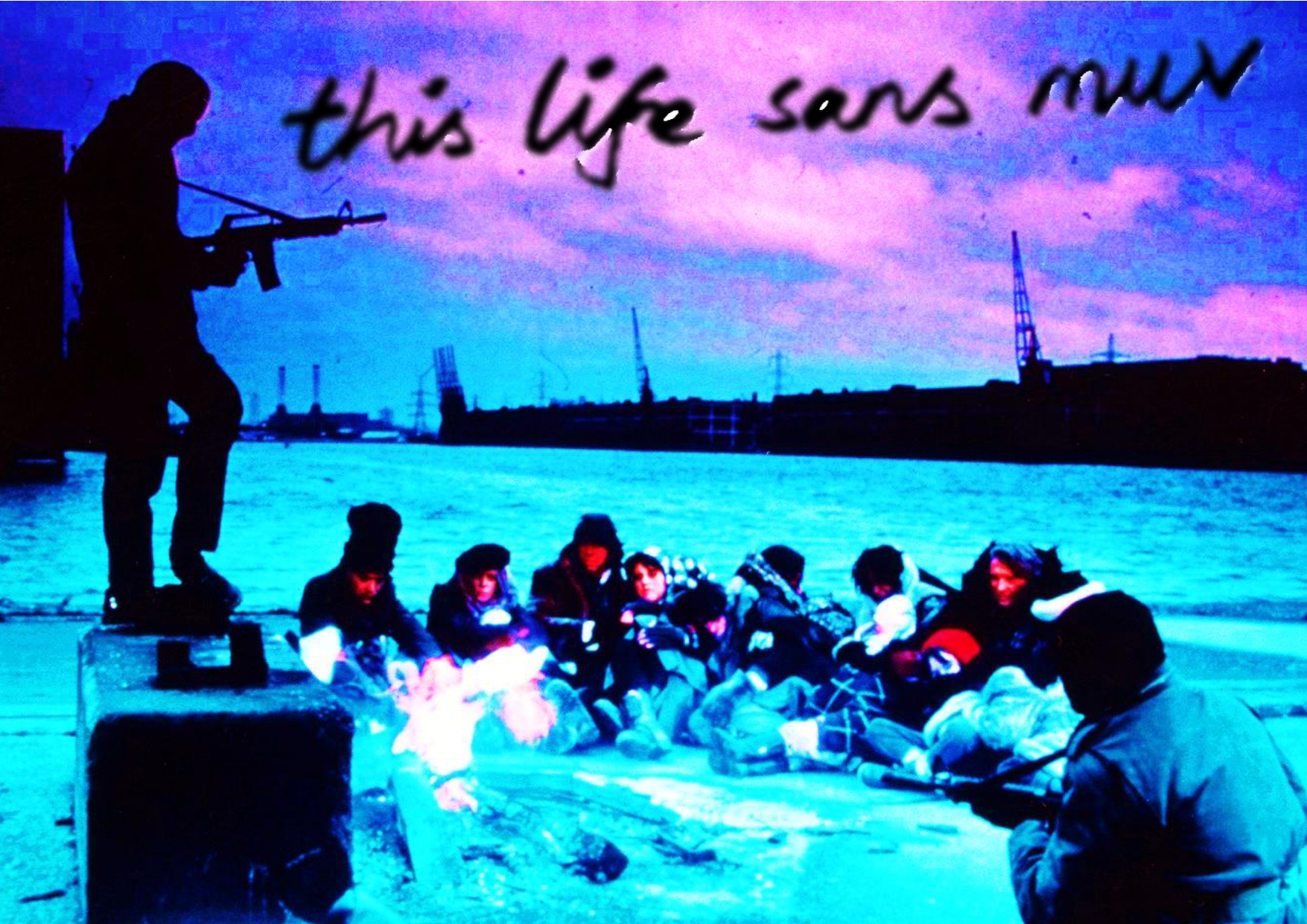
‘this life sans muv’
‘while on top sol’
‘Amp neath mud rocks her thighs’
Feels like ‘past’, with specific ‘earth/nature’ words that I’ve never heard before mixed in too.
+
Seems that the boy has just fallen, before this scene. A lone girl either pushed him or tried to grab him as he slipped, and failed. Or pushed him after he tried to assault her. Or pushed him out of spite. Out of sociopathy?
She has a scratch on her arm, skin flakes coming off.
Is she gonna go too?
The way it’s written, seems like nature is crawling all over her body, as if she’s already dead.
+
And CHAPTER ONE is done.
One single page.
A mass of single syllables.
No sign of THE FIELD yet [could be England, as a mass entity]
+
+
CHAPTER 2: THE KIN MAN SHOWS HIS BONES
+
‘Dark spit runs down a glass pane in the old house.’
+
This is very cinematic. If I picture the transition from the girl running away from the cliff [I think that’s how CHAPTER ONE ended] to ‘dark spit’ snaking down a window pane.
It’d probably work better in film.
Might just be me, but when reading, I expect to lock onto something more distinct, a character or action or place, not something de-anchored from anything, like spit on a window. I mean, I do this without thinking, out of experience. It’s not a want or a should. I shouldn’t do it. After all these de-con-strucs, I should expect the de-anchored, the abstract. And it’s the speed of reading too – cultivated from years and years of reading commercial sludge – it makes these kinds of works difficult. I just need to slow down. Read not skim. Read like I’m reading something in Chinese.
[I just got an e-mail from Rebecca saying the text works much better with a decelerated reading pace!]
+
‘Grown a bit, Flow grabs her bag and heads out the grey door, down the street and past the sign. Two years till school ends, she ends it now.’
+
Flo is ‘a lone girl’ from CHAPTER ONE?
She’s running away from home, the dark spit either her own out of disgust or a parent disgusted at her saying ‘skibiddi toilet‘ 25/7.
One paragraph, five sentences, a lot of information given. As economical as the 1 syllable conceit, perhaps a companion to it?
Which came first?
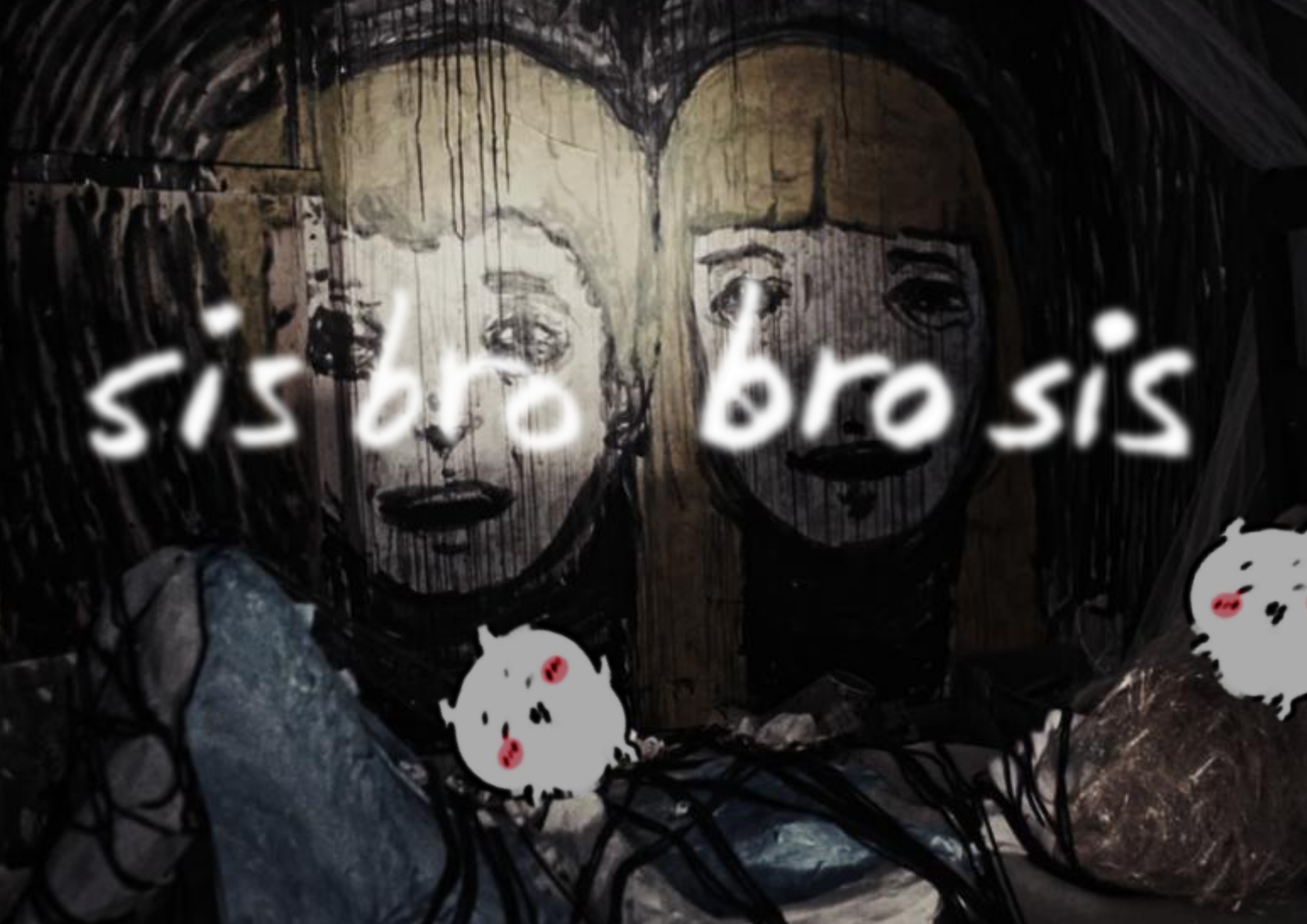
Are they twinned at conception, like the ‘twin bro of sis, twin sis of bro’ in CHAPTER ONE?
+
‘Walk out on the step kin, turn to the street.’
+
It’s her step family she’s running away from.
‘Kin man shows his bones’ is a euphemism?
+
‘where she will meet a frore morn.’
+
Frore morn?
A reference to the alien lump from DS9 who never leaves their barstool?
I don’t know if this is an invented slang or a real, parochial one from Rebecca’s own background/experiences.
Doesn’t matter.
It’s foreign to me, whatever the origin might be.
+
Ah, the kin man is the relative of the school pal who helps her escape. His bones are literally his bones, as in they are visible through his clothing. He has lank hair, stoops when he walks. He’s a mess basically.
After a few weeks, he leaves and doesn’t come back. Only he does come back. Did come back. Flo discovers him later, half dead, muttering three separate things in one single sentence that may be connected.
+
‘- I’m falling apart, I’m a solipsist, I don’t know what it’s like to be awake or asleep.’
And then another ‘shot of three’:
‘They are an exodus, leaving this land, despite what they said.’
+
The last one is more directly linked to plot, but it’s not clear who he is talking about. The liberals? The wealthy abandoning ship to go live on a space spa?
Is this a real person or a mouthpiece?
He speaks a little oddly, similar to how a lot of characters spoke to Kattar in Sea of Glass. As if delivering a monologue to any-one-whatever.
Does he even know Flo is there?
Is he that far gone?
Monologue-wise, I’m attracted more to the first part of his line, the individualistic. The ‘I’ is in crisis, physically akin to a POW, stuck in solipsism, can’t tell the difference between the real and the not. The kin man tells all this first. And then follows it up with the OTHER, the collective ‘they’ not doing anything to help [him? The general populace?]. Perhaps even causing the dissolution of the ‘I’.
Welcome to the [post-[post-]] modern world, kin man.
Atomised, stuck in our own heads, desperate to help others.
He’s given up, hasn’t he?
Flo takes his food, gives up on him too.
Briefly looks for a phone, maybe to call ‘they’ for help, then gives up on him.
+
Outside, nature is glowing, the sky is gold, bees are flying in a somnambulant state.
They are near “death” + oblivious.
Or it’s irrelevant to them.
They don’t pathologise death like we do.
Nature persists, finds a way etc.
+
The first chapter was disorienting, but Figures is drawing me in.
Just like Sea of Glass did.
Is it cos I’ve met Flo, the kin man?
The text remains abstract in feel, ambiguous, yet not completely without anchor.
If it were just a long series of nature descriptions…
+
RE: the economical writing: it’s not stripped down or spare, it’s more an economisation of narrative space-time, reducing scenes down to a series of still or slo-active images that give you a vile/abstract sense of what is happening. There is conjunction with invisible joints. The dark spit to bag pick-up to the street outside to bus hike to the kin man and a showing of his bones.
It’s similar to Ice // Anna Kavan [which I’ve also done a de-con-struc on, coming soon], only without the nocturnal language or the constant psychological straining of the narrator/MC.
I don’t know what Flo is thinking, have yet to be allowed inside her head.
Is it like Ice?
In its movement through narrative space-time, yes. The rest of it, maybe not. I’m pulling it in only cos I’ve read it recently. Though if Flo repeatedly enters a mass of black forests, then it definitely is.
+
In Sea of Glass, the narrator [Kattar] roams through the building, floor by floor, room to dying staff to room to makeshift theatre space. There is a rambling, scattershot yet strictly organised feel to it all. Are we inside his head? I can’t remember now. I know he’s looking for the exit, so he does share some thoughts. Flo, however, runs solely on reflex, reacting physically and emotionally to that which tries to interfere, to grope at her.
Is Rebecca interested in the singular-psychological? The crowd-psychological? Would it make the natural world, the mass of everything, too small?
The kin man is solipsistic + falling apart, that could be a comment on that.
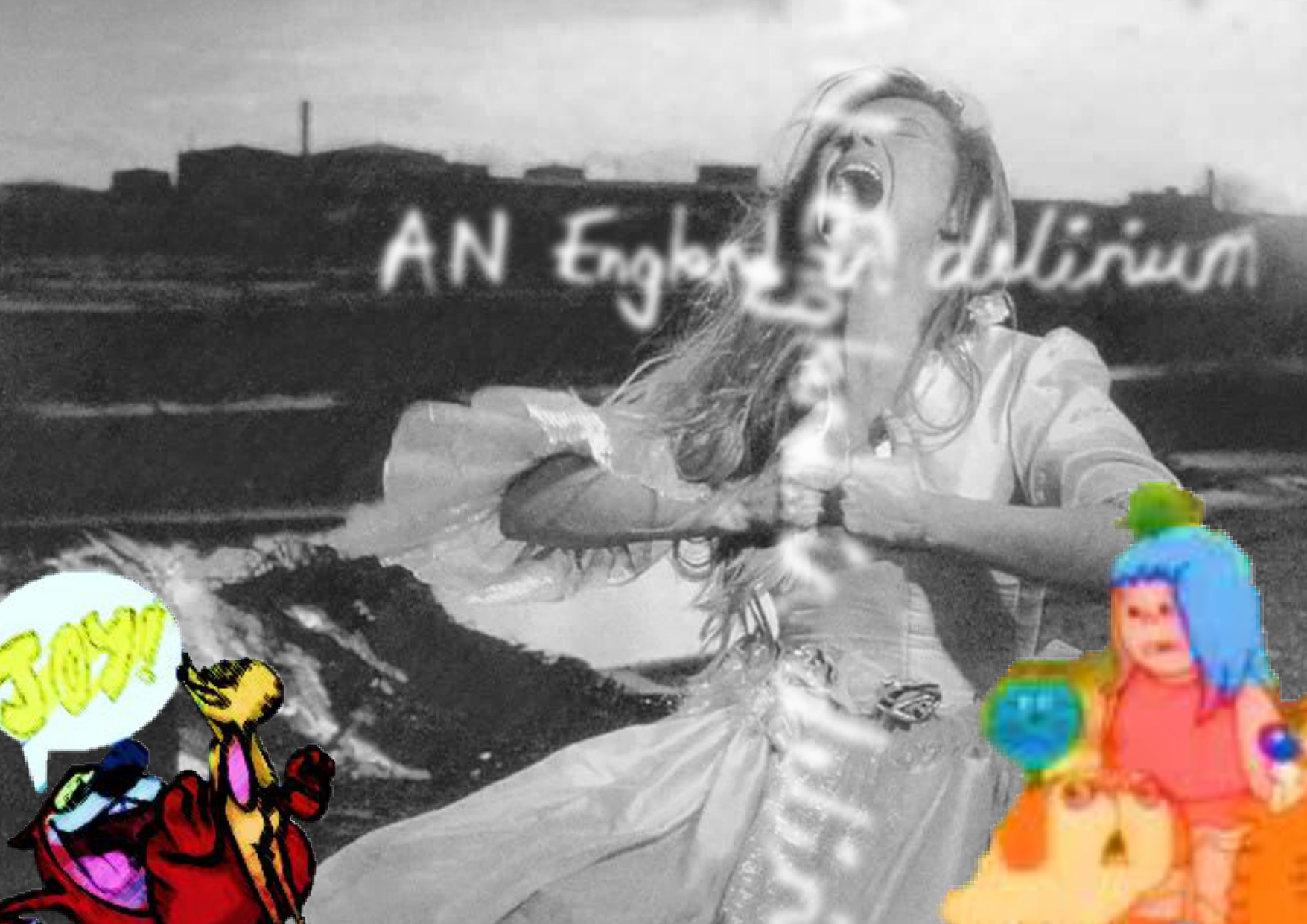
You stop and think [while AN England is in delirium] on your sofa, you won’t last long.
Gotta keep moving.
Like those sleepy bees.
And other woodland creature types.
+
+
CHAPTER THREE: THE ONE MAN BAND PLAYS
+
Someone on IG did a review of this and referenced a 70’s British film called The Stone Tape, and they’re right, the first chapter did have that kind of vibe, slashes of English history imprinted onto the earth. And from Stone Tape Theory, we have ley lines and druid astrology and pagan sun festivals, and is all this buried in here somewhere, layer upon layer, is that why there is archaic vocabulary now and then?
A Japanese analogue to this [Brit paganism], and maybe more detailed, is the onryo [trapped, vengeful spirit] in Doomed Megalopolis that has a deep hatred of Tokyo/Edo in particular. It rises back up as Tokyo expands in the early 20th Century and is a force connected to indigenous tribes, so there is a bitter irony in portraying it as the villain. In fact, the onryo ultimately rejects Kato the main villain as a vassal. Negative associations become positive ones. It’s complicated. At one point, a young woman vomits up a huge slug-like creature. Has a spell thrust up her muff. Gets called ’emotional’ etc.
+
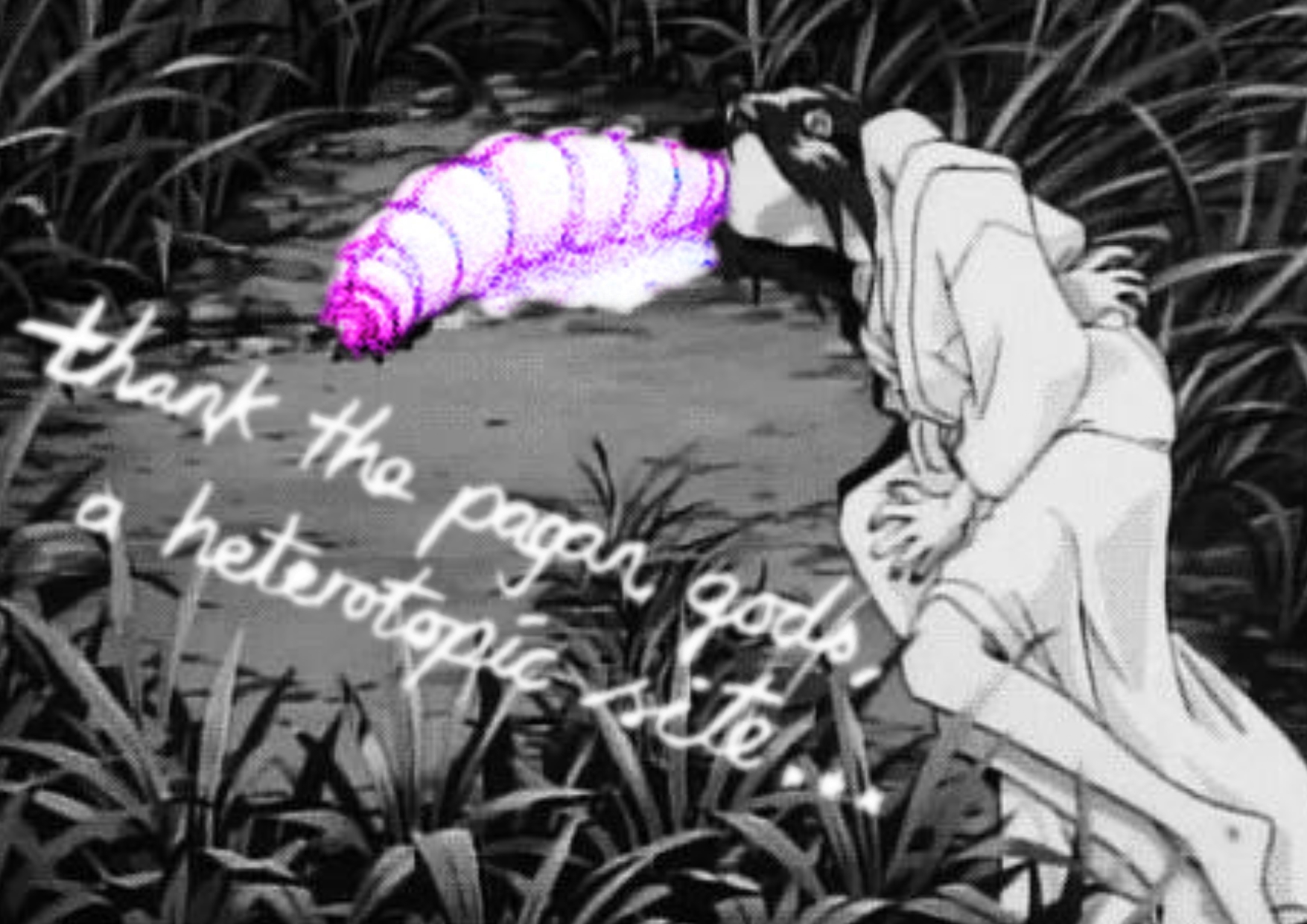
I just found this analysis of Teito Monogatari [the novel that Doomed Megalopolis is based on] and it seems to fit Figures quite well.
‘…[the novel] is a heterotopic site where…contemporary representations of oni [evil spirits] reflect past representations, where oni of the past are not simply superimposed upon the present but both act as extensions of each other in an odd continuum.’
+
Honestly, I’m not really superstitious, but I do like cinema soaked in it. Soaked in Satanism too. Novels soaked in it. Mixing in sci-fi as an extension of this bizarro mythology. In Planet Rasputin, one of the characters comes to believe Uranus to be a cosmic ley line to some THING OTHER. In other novels, it’s Dysnomia, or the Oort Cloud, or one of Pluto’s Lagrange Points.
This kind of thing feels inevitable to me.
And has little to do with CHAPTER THREE, which I’m going to get back to right now.
+
‘A mass of bods head on to ships with a scowl on their mug and they grab and run.’
+
Two things:
i] ‘bods’ is a nice way to circumvent ‘bodies’, a 2 syllable word [this happens a lot throughout].
ii] ‘…and they grab and run’ is clumsily added on at the end, showing that the narrator does not care about grammar or Oxford commas anymore and will say what they want how they want.
This any-way-whatever approach clashes sweetly with the lyricism elsewhere.
Gut spec: human-centred narrative is any-way-whatever, while nature-centred is freestyle lyricism.
Could it be?
Someone needs to do a study.
How about you, Garak? You seem to be the one with more than enough time on your
+
There are toads [not of Toad Hall] and they’re speaking, possibly in the mind of the narrator only.
‘- When nigh is the end, we climb up high, and establish a new order, ordained by fallen saints, who pushed their scraps to the sides of their plates – ’
Interesting comma placement, suggesting a separation [or long breath in between] to all of the above actions e.g. climbing up high. Stop. Establish new order, ordained by saints. Pause. Those guys pushed their scraps to the sides. I don’t know why it’s like this, but I like the uncertainty [in my own reading of it].
As for the toads, they’re more articulate than the narrator, not a huge surprise really. Though it appears they’ve gotten most of their vocab from answersingenesis.net.
What does a toad represent biblically?
According to wiki, frogs/toads brought the second plague of Egypt and were associated with unclean spirits in the Book of [ludicrous] Revelations.
They turn up in a sandwich in The Virgin Spring.
As rain in Magnolia.
But we’re dealing with a pagan version of AN England, or so it feels, and the druids believed toads/frogs to be symbols of transformation, renewal and ‘the runes said so’ pond sex.
So, the toads here, in Figures, may be renewing the land to the old order of fallen saints, of scraps at the sides of plates, the original imprinted layer [that had what as its own precursor to paganism?].
+
‘Red ants march from the drains, a war in their heads.’
+
Do ants not like toads?
Do they fear this kind of paganistic renewal?
Perhaps it is just symbolism. Ants equal order, arrangement, hierarchy, and toads mean chaos and Beckettian run-on sentences. Ants have the beautiful dualist interpretation [given by me] of a war in their heads; an actual, physical intent vs a delusion projected outwards.
It’s unclear if only the ants are eradicated by the hot wind that sails in, cos we’re moving on already.
+
The One Man Band is here, casually spitting on the 1 syllable rule…
‘- Cloaked and besmoked in smocks of motherboards. Chainmail computer parts will protect your heart. CPU percussion, whack with remote wand. Microchip knees klash.’
…singing a mix of superstition and Microsoft. Perhaps that’s why it’s multi-syllabic. It’s a song of before times. And he is a one man band – one bod but many parts, many syllables. He wishes to express more than is normal, more than has ‘become’ normal in these times, whichever times they may be, whenever they may have begun.
+
‘Spirit loops suggested in dead programmers.’
+
There’s the Stone Tape again, only now it’s in the software left behind by dead programmers, or equipment like keyboards and split wires recycled by the man. And the song seems to be explaining the current [deadly] state of music. Actually, is it a song or just dialogue? Or monologue perhaps, as Flo hasn’t verbally engaged him yet?
+
The One Man Band engages her, reveals that something is coming up from the far South East [Kent? I’m not a fan] and everyone is scrambling for boats on the coast.
Why is Flo still here?
Does she not know?
Could have something to do with climate change as the sun is getting unbearably hot [‘and the red sun on the land’ from CHAPTER ONE, makes sense now]. And we know what happens when the sun comes out. England heads to the beach en masse, drinks a lot, punches a horse, trashes the beach. That’s what’s happening now in the narrative, more or less. Or so we hear. Everyone hitting the coast, trying to escape the island they used to sing nationalistic songs about. Fucking babies. Now your land is becoming the Gobi Desert and the toads are taking over, reclaiming their shit. Toads with superior vocabulary, more than 1 syllable. Though, given time, they’ll probably privatise the land too. Just like Toad of Toad Hall. Ah, I almost forgot about him! Is it connected as a reference point [in Rebecca’s head]? Probably not. That was a story for kids, about the quaintness of the riverside [rural, parasitic England] and the threat from the rich man’s fever-sketch version of the working class [the weasels, painfully misrepresented] But there was a bit of paganism too…the god in the glade…a fairy god?
+
No gods so far, in Figures.
Just nascent delirium.
Growing less and less nascent as Flo ambles along.
I’m trying to think of other films or books with a similar vibe/thematic fixation, of things falling apart but in a mad, surreal way, and my mind is blank.
Just Ponds, really.
In its own way.
With a more explicit focus on mutation.
Is there mutation here?
Not sure yet.
+

+
CHAPTER FOUR: THE HONEY GHOST
+
I’ll probably go through this one and then just read freestyle for a bit, then come back in later and record a new layer of thought.
I’m only on page 10.
4,000 words complete so far.
ARGH.
+
‘White light warps skin while blue wasps sting and cure dead black rats.’
+
‘W word’ light ‘W word’ skin ‘W word’ blue ‘W word’ sting…the spacing here is quite beautiful.
Almost distracts from the oddness of what is written.
Blue wasps?
Stinging and curing dead black rats?
This makes no sense.
It’s then succeeded by ‘A church sign says Come the Pure.’
So, the church itself makes no sense [outside of human fear/need], is predicated on resurrection [of Jesus, of rats?], and insists on ‘Pure.’ The juxtaposition but also continuation – of things that make no sense – opens the chapter, before Flo comes in and steps on dry graves.
Why like this?
The delirium/heat is reversing things, making the abnormal normal. Opening a chapter with description of the environment is normal, and here it’s the same, only the description is anything but. Imagine, in some random airport slop: ‘white light skims off the spring wasps as they fly over spry brown mice. A church sign says ‘Come All Those With Joy In Their Heart.’ Two lines to skim past, setting a tedious scene. Now, in Figures, it’s lyrical Plague Feel + deviant wasps.
I must get acclimatised to this, blue wasps + dead black rats.
The church is as it is, ironically.
Perhaps more judgmental, a little less effulgent.
Is it?
I never go.
Last time I did, I nearly had a psychotic break.
+
‘Sweet bugs scent as they float through the scene, trace their glow tween the boy as he clones to ghost twins, this twin of her, now to him self, on the road.’
+
This sentence opens up in a clever way, from ‘sweet bugs’ to ‘ghost twins.’
Flo “sees” her bro and her self, first in sepia, then in dark rock face [Stone Tape Theory!!]. Beauty + peace into Alt-beauty + death. I assume he’s dead. Did she push him off the cliff at the start? No idea.
Him self – another neat way to avoid two syllables.
+
+
Reality returns, the now-layer. Grey fuzz balls + dust trains.
+
‘Trees night, woods night. A creep all round.’
+
How to reconfigure the brain to write like this? Not only in 1 syllable words but perverting the structure of the sentence to this degree while still functioning not as a poem but a narrative?
Is it the psyche reducing everything to base nouns + feel?
Rebecca’s not even trying to force it into the rails of a normal sentence.
I mean, done badly and this would be painful. Pure artifice. Like Cuba Gooding Jr in Radio. But here, it’s not a repetition of tics, it feels authentic. The question is how. Did Rebecca go to a certain brain-space when writing? Did she attune herself to that environment, to the layer itself, and just go from there, without head-locking anything?
+
Is Flo being attacked by animals, mutants or men?
A Fairy God?
+
‘- No matters. Couldn’t leave you to the organwalkers and tearjerkers.’
+
A woman has taken Flo in and is talking in-world nonsense [to me]. Seems like Flo may have been attacked by thieves [with claws?] who are incorporeal??
I’m really not sure.
No matters.
It’s either humans perverted through language + neo-slang, humans mutated, animals mutated, or some void-OTHER force that has come with the old red sun.
+
The saviour woman is a royalist. I say that and not Monarchist cos there’s a distinct English Civil War vibe to the scene, with the woman hiding aristocrats in her countryside house. She probably has the arrogant king’s skull in a glass case somewhere.
Flo senses the insanity, tries not to show that she knows. Says she’s searching for her brother ‘cos no one else is, not now.’
The brother is not smashed on the rocks then?
I may have misread CHAPTER ONE.
Or Flo just can’t come to terms with his death and is hallucinating this search for him?
Thematically, the latter feels more synchronous. Fits with the layers and layers and layers of AN England that is both long gone and coming back. If she connects to the right stone tape, the glowiest ley line…
+
‘A drone from a beck, a call from a dreg. No scar in the mud will ward a clasp hand, a strip of black light neath the bulk of a bear, or the taint mask of a god hart.’
+
The language is mutating the deeper Flo goes into the countryside, regrowing its pagan roots?
Is Myrddin gonna show up soon?
[I looked that one up].
+
‘While the morn sicks up its night time feed, and mist speaks bad things to the trees…’
+
The day is puking up night, the mist is streaming out Iago-like.
Nature/the elements/swirly cosmos isn’t just pathetically fallacyed in this, it’s paganised to the absolute bone spur, poeticised to Hell gate 7, given a weirdness that suits the burgeoning environment like a pervert’s giallo glove. It doesn’t just evoke dread or unease, it makes me feel that the day and mist are mad, possessing dark desires and pathologies in opposition to Flo who has remained pretty much blank so far. She is the one venturing into the imprint, maybe insane too via her bro-search, or maybe not, maybe that’s genuine. She’s not ranting about the nobility, at least. Seems completely uninterested in monologuing anyone. Kind of like Dorothy in Return to Oz. Just walking through the ruins of a place that used to be, at best, glorious in mythology, at worst, a technicolor dictatorship. Bless her.
+
Is Return To Oz a touchstone for this?
It did have mutation in it, and a clashing of various realities, and the NOME KING whose kingdom rose up from the ground to take over Oz.
Didn’t really fuck about with the language though.
Or have a bro-search.
+
‘Her mind’s eye sees his crest and beak, sweat white skin.’
+
She’s being stalked, by a tearjerker?
‘Her mind’s eye’ suggests hallucination. Someone is out there and she’s mutating them inside her head. Based on what? The words of a royalist?
Is she being infected by the people she meets, or is it the heat from the old red sun exhausting her, sending into delirium?
Like Jane Asher in The Stone Tape, is she more sensitive than others to this?
+
ARRRRGGHGHHJBJBVHVBJHVBHVJGVXHVXHX
An England in delirium.
From whose POV?
I thought it was stated as fact, or observer’s description, but the use of ‘AN’ could mean it’s Flo’s England, her inner translation of it.
There is panic and mass exodus, things are dusty and falling apart, all this seems to be true, yet the delirium could be the mixing in of other parts, ancient parts that are heightened the more drear trees she sees.
+
+
New word: Phrontistery
‘A place for education + thinking, typically used in Victorian times. Not a strip club.’
+
It’s the start of CHAPTER SIX and the royalist has left a note kindly telling her to either become a member of the aristocracy or get out.
Sounds like my sister.
The ‘get out’ part.
Not a glib line, she really did kick me out of her house in Brindisi when I was visiting her in 2004, left me no choice but to go to Rome for six days and grow a beard sink into mild depression pull myself back out with dreams of a future WordPress blog nu trek old trek marriage etc.
+
THE LUST PHRONTISTERY.
Not a school but a phrontistery.
Where teachers used to cane the kids and god knows what else.
This may or may not be coming back.
It’s in ruins.
+
I’m gonna read on the train and make notes later.
I may have finished the whole book by then.
+
Query: where did Rebecca get all the vocab/ancient slang for this?
A glossary esoterika?
It must’ve been hard work.
Way too hard for a scobberlotcher like me.
+
About the mutating paganistic language: it is quite frustrating at times. Not easy to read. With Chinese or Japanese, I’m ready for difficult words or unfamiliar terminology, I don’t mind it. Here it’s more like Portuguese. I can read the word, sometimes know what it means, but not in this new context. And unlike Portuguese, I can’t so easily look it up in the dictionary. Obviously, there is a reason for its usage in Figures. Atmosphere, the othering of me the reader, delirium residue, a sense of mythical past colliding with nowadays and also madness, maybe a schizophrenic strain of psychogeography. Or not that cos Flo isn’t trying to free herself from cottage-thought by randomly hiking to Exeter or Battersea or into The Wash, she’s doing it for reasons yet unknown, to find her bro if I believe that, not sure I do. And Flo isn’t proactive, doesn’t feel that way. She does keep moving. Reacts to everything. Passively. Not really a reaction at all. She’s bobbing down a river, hoping the next guy who pops his shadow-head out of a tent isn’t a lunatic. Not even hoping. She sees a tent, she comprehends it. There is no future place mentioned as a destination. She’s not even heading to the coast like the rest of England. In fact, is she not heading deeper into “The Field”? The Group might turn up eventually, I suppose. So far all she’s encountered is a mass of individuals, figures, marginal nutcases who have all decided to stay behind cos this is their land whatever that means.
+
What if there is no collective unconscious and everything we see the faint edges of comes from TV movies media snatches of visuals we got from out anal years [1-3, or 0-5 to be a little bit broader]? And what we’ve done is reconfigure it in our unconscious so it makes no sense?
What if-
+
I would bring in Riddley Walker and A Clockwork Orange, but I’ve never read either of them.
From what I can glean from wiki, the “future” language of Riddley Walker is heavily phonetic and abbreviated, a kind of degraded evolution that-
+
In Figures, the language is abbreviated from traditional words and old English [I think]. But not all the time. Mostly when it needs to be 1 syllable e.g. ‘brother’ to ‘bro’, ‘mother’ to ‘muv’.
Does the language in Figures have enough weight?
If it’s genuine old slang/phrases, yes, but weight for who[m]? It can evoke but not be understood [easily, by me].
If I read Klingon, there is only the weight filtered in from my relationship to a fictitious TV universe. I wouldn’t strive to read/understand it cos that weight isn’t enough.
In Figures, the language becomes more abstruse, or mutated, as Flo sinks deeper into the countryside. Things elsewhere are collapsing. Everyone is fleeing. Only the FIELD remains, with its layers, layers, layers [+ layers], mythical and historical even if you know nothing of myth or history. You can receive the sense of the thing. That is the weight.
+
It’s interesting how no one Flo has come across so far is taciturn or standoffish. They all have something to say to her. Even the toads.
Quite similar again to Sea of Glass, as Kattar, the protag in that novella, traverses the building he’s trapped inside and everyone he meets has their own little monologue to dish out [even a set-builder on a theatre stage at one point] and each monologue is very particular to that person. They don’t care if he groks it or not. Maybe cos the end is nigh and there’s no one else listening.
+

+
I’ve just read a few chapters on the train and written down related notes in an e-mail to myself. It’s quite clipped. I’ll type them out here, maybe with a few post-hoc additions for the sake of clarity. Or maybe not.
+
[E-MAIL NOTES]
Lust phrontistery.
Blind man having a wank?
Dank symbolism, teacher-figure on the floor of classroom, a mess of chalk, playing with himself, with fake legs and crutches in the background. Wanking over societal collapse? He can’t cum even after many hours. Flo decides to lean against the wall and observe.
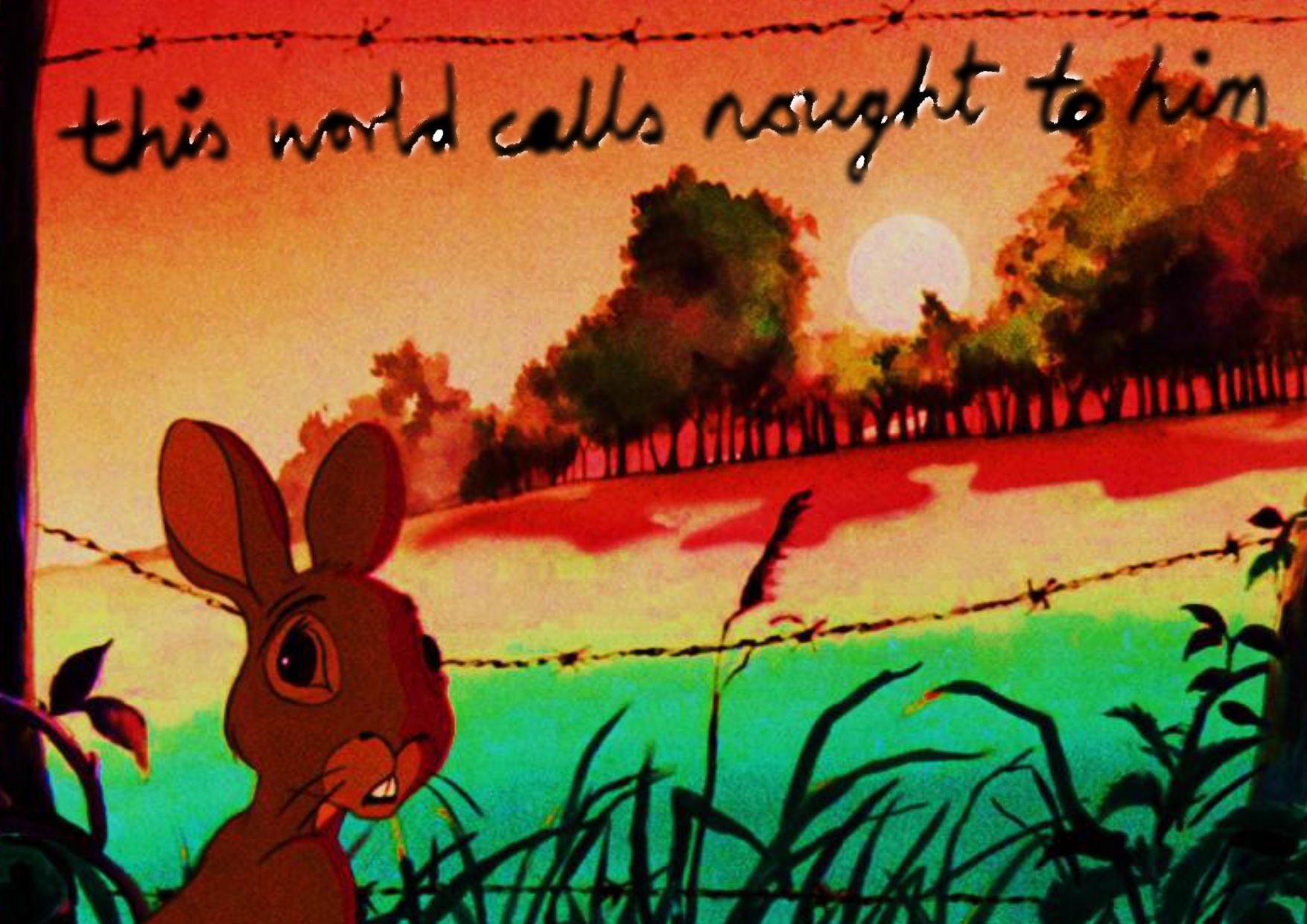
Between murk of mutated linguistics, lines like ‘caught by the other world, this world calls nought to him.’
Ah, he is the teacher, was. There is a letter where once again more syllables break in [the old language] and he explains his current self, his determination to stay put. Flo helps him to cum then stays another 3 days until the body is dead. Does the esotericism of the language cloak the perversion? A young teen tugging off a blind man in a ruined classroom. An act of mercy/empathy? The jizz was the last of his lifeforce. It went nowhere.
Generally this takes a lot of focus and energy to read. I’m on page 22 and it feels like page 90. Still have no clear sense of Flo. She is like a drone sent into the sticks to record whatever it is that is doing this. The letter from the teacher says it started in the corner of the land, something about anti spores. An ancient pagan force expelling the grot?
‘Flo hugs mid drift…’ – this is literally a mistake I’ve made before, ‘midrift’ over ‘midriff.’ I am the beginning of the rot.
Everything is gone dead dying. The animals are not spared either. Nor the cars. The field is flexing its sinew, it’s blue veins.
Druids or nuns choking on bad seed. Flo translates one of them slurring nonsense as ‘bro,’ and decides that they are pointing her in the right direction to find him. Communication is spent, whatever each peep needs it to be.
The druid nuns point south as warning? Isn’t that where the Anti Spores are? Seems like Flo is heading deeper into Annihilation.
Language in Figures is a maelstrom of randomness and nature slop and truncated ‘this isn’t what I think it’ll do though God I can barely be bothered to speak.’ Needless to say it is not the usual sludge. A mox of what and so beautiful and what again.
Still not sure what to make of this, how I feel about it. Despite the mutated brilliance of the language used, there doesn’t seem to be anything fresh at the core. Just a delirious girl walking through the mutated countryside. Could be my antipathy towards The Field/England. An ark load of nature/pagan symbolism sailing over my head. Or maybe it’s the difficulty of reading it ‘speaking bad things’ to me. Maybe I do like it, later on. When not reading it. I don’t know.
Delirious swarm of bees, no longer sleepy, and a torn off peep leg. The environment is deranged, its occupiers also.
In Witchfinder General, nature kept its beauty, while the peeps did degenerate things. Here it’s everything. In fact, the peeps haven’t done much except decay and monologue so far. Flo is simply a recorder.
Another peep, a grown girl stuck in place cos she was a fugitive in before times. She’s drunk drugged out in wire town of snipped wires. This time there’s dialogue instead of monologue. Close to an actual normal conversation. Cos she’s back in a town not countryside? More vague directions to bro. Flo comes alive a bit, not just a receiver. Kattar did that at times too.
‘Grown girl’ not woman. Implies bod development but not mind. Nice touch. In a text full of nice touches. Clever touches. It’s a clever book.
It’s not easy to pinpoint Rebecca in all this. Is that the problem I’m having? Same with Sea of Glass, I admire the writing and the oddness, but I don’t see her anywhere, don’t know who she is. Is it all fused into the writing of it? Has she expunged [excommunicated?] herself from the text? An England is in delirium outside of her. Theres no mad human psychology at work or play. Every interaction is a tiny play, a script, representative of something or some type. That’s what it feels like.
But this is from her. Of her.
Maybe the environment is more interesting, the humans flattened by it.
I don’t know.
A man fed by sunlight. Feeding his body to what might be rats. Happy to do so. He was degrading socially before the Anti spores, lost his job and flat. Another representative of something, though this one does have some pathos to it. Flo feels it too.
I perk up when there’s peep interaction, even if none of them really come alive. Coming alive would clash with the feel of the text. All the life is at the coast, scrambling to get away. The mutations creeping in from the wings. These humans are the ones who have given up. Are making a stand.
+
+
I’m warming to the text. Post dialogue glow?
The descriptive parts work better in the medium of film, I think. I remember saying this same thing in the Sea of Glass de-con-struc, and to Rebecca in an e-mail yesterday [and earlier in this same de-con-struc – i just checked]. It’s easier to watch something like Mirror or Stalker than to see it in text form. But then, conversely, the visual image loses the archaic terminology that the text brings. Maybe I just resist cos it requires energy to read. I think I’ve said that before also. I know I have.
+
Maybe it’s not good to be reading this on a phone screen. I have to keep adjusting the sides of the file to fit. And the text looks small.
I’ll buy the paperback when I have cash.
+
More films that come to mind while reading this, some of them repeats:
i] Butterfly Kiss
ii] The Last Of England
iii] Drowning By Numbers
iv] Watership Down
v] Blake’s 7 [for its Welsh Quarry/New Forest as alien planet fixation]
vi] Valerie And Her Week Of Wonders
vii] Return to Oz
viii] Willo The Wisp
ix] Alice
x] The Aftermath
The Jarman film [Last of England] has the most in common, probably, but in terms of feel…Butterfly Kiss…Amanda Plummer looking for Judith so she can sacrifice her, only Flo is more like the Saskia Reeves character, passive, but not like her really cos I don’t really know Flo yet, only that she is delirious, has a possibly already dead bro in her head as her version of Judith.
I also come back to Ponds.
It has some of the same themes as Figures [as I interpret them, could be wrong], they’re both about mutating environments and sluggish layers crawling back up from any-place-whatever.
What else?
+
UBIK! Can’t believe I forgot Ubik. I only did the de-con-struc on it a few months back. Though perhaps the difference is, with Ubik, the characters are both immersed in and opposed to what is happening whereas, in Figures, Flo has already been ensnared and the mutating environment just is.
+

+
It almost slipped past me – this happens a lot in the more descriptive parts – but a man is fucking a corpse and Flo creeps up to slap him on the ass, which either makes him cum or kills him.
Is she helping people, giving them a small respite?
The narrator fills in how the man and the corpse came to be there, is it just speculation though?
Is the narrator Death?
The flea on its robes?
+
Next day has gold etch weather.
A pleasing heat glow.
For about a page, the FIELD is a happy, almost cartoonish place.
The Flo comes across the aftermath of a bombed out something and, when exits, the air has gone bad, the grass and wheat and branches may sexually assault her, and there are even some dark birds omenizing over head.
As before, the land [+ its agents] is schizophrenic/perverted.
+
+
CHAPTER TWELVE: PUBLIC INFORMATION DREAMS
+
A change of pace + narrative style.
An observer’s report of Kid Q and Kid P, who I guess might be Flo and her bro [though the chapter title says DREAMS so maybe this is the psychological rendered via the unconscious lined with real memories?].
They appear to be making amateur movies where Kid P must fall into water or get a branch in the face.
This is all much easier to read, obviously.
Intention behind it?
God knows.
+
The kids are indeed making little movies. Or a collection of individual scenes. Kid P is the one in front of the camera 80% of the time. The fall guy.
+
Observation comes to an end.
Still not clear who these kids are, who’s observing them.
Maybe they’re Flo & Bro, maybe no one.
Why observe kids making films, messing around?
They are the future.
+
I can’t really explain this section nor contextualise it, not without someone coming in and telling me exactly what it means.
Maybe at the end it will fit into place.
+
I’m mostly just narrating Figures through these notes now, and tacking on some occasional asides.
I don’t want to spoil the climax so I’ll keep reading by myself, unobserved [by self].
+
I’ve just had a thought. Flo = flow, as in just go with. Short for Florence from The Magic Roundabout? Florence and the Machine?
I’m reaching.
+
+
Another thought/observation: Flo engages in more dialogue as the novella progresses and does not speak using the same slang/old English/truncations that the narrator does. She even calls her bro ‘brother.’ Did she do that before, with other peeps, the royalist, the one man band, the drunk fugitive?
+
I went back and checked and it be like this: With the kin man and the one man band, Flo doesn’t communicate at all. Nothing. She says a little bit to the royalist woman [after being attacked + getting some rest], and from that point on a little bit more to everyone. As if she’s maturing alongside the deranged environment. Also, she uses ‘brother’ each time, except once, with the hazy druid nun in the church, where she says, ‘what about bro- ?’
So, the speech/dialogue doesn’t allow the esoteric words in, which means…??
The narrator is the land, of the layers?
+
This all started when Flo ran away from the home of the step-kin, to search for her bro. The dark spit on the window pane signaling a switch to psycho-fantasy. She spat at her reflection. Or the spit was carried over from the cliffside opening and everything since then has been a flashback leading in a spirit loop [of a dead programmer] to the cliffside ending. A flashback that was actually a dream and all that’s really happened is Flo has run away from home.
Could be an allegory for growing into the drudge-madness of adulthood?
Or living on the streets?
The whole thing filtered through the psyche of a grown girl hallucinating, possibly during a heatwave. And the scientific observation chapter was how she interpreted living with a step-family. Does that make sense? The text is too vague to confirm anything.
+
With the power of the faculty of association, you can dream anything, write it down, believe in it wholly. Lady Oriana the Snake Lady, Saint Maud, a ruined Oz, An England in Delirium, Undead Bro…
+
Or: everything may have something to do with wires, antenna, transmissions, a lab, technocracy etc.
A reaction gainst or mutation of.
No matters.
+
Semi-erotic dream about bro in a magic garden where bods glow and blur.
Please don’t let this turn [generically] biblical.
+
Bro ghost. Red man. Follow the hum.
Flo’s off to the coast now.
Exit.
+
A breaking up of 2 syllable words e.g. mi le, dis ease, fa il, fat igue to keep go in nigh the end.
+
Bay-kok??
+
Slit throat.
Git spit.
Brown babies crucified on a beach that is most likely fucking freezing but maybe not cos the old red sun is microwaving everyone, all the stragglers who didn’t jump on the boats quick enough, who have gone fully mad, fully cannibal, fully whatever horror they read in Sunday school when they were a kid, fully beach brain, fully might as well now the nigh is end.
White light.
Myth re treat.
Nome King a blob of wet plasticine.
Mombi a wick ed nurse
now
Now she remembers.
+
Figures Crossing The Field Towards The Group is available over at Tangerine Press [along with work by another de-con-struc alumni, Karina Bush] and Rebecca’s other books are somewhere else, possibly on her website.
+
 PsYChO hOLosUitE [zine]