+
Text: Vermilion Sands
Author: J.G. Ballard
Plot: A boring future where nothing happens [to the upper-middle class]
Subplot: Ballard wrestles with the [super-]position he finds himself in and tries to locate that [supra-]position in a futuristic resort town where all the narrator-analogues of himself don’t quite fit, or, at least, he hopes they don’t, would be disgusted if they did.
+
Back to the old ways, no more fancy images.
Text only.
+
General sense of Ballard?
I’ve only ever read the novel where the guy crashes into the down-stream bank of the Thames and slowly transmogrifies himself via psychic-deviancy into a winged and/or drowned god.
That’s how I remember it.
No other details.
Winged and/or drowned, I’m not sure.
+
In the introduction Ballard says, ‘Vermilion Sands is my guess at what the future will actually be like.’
On the back, the blurb states: ‘Vermilion Sands is J.G. Ballard’s fantasy playground of the future – a latter-day Palm Springs. It is populated by forgotten movie queens and dilettantes dreaming up malicious games to relieve the boredom of a technocratic society.’
Dystopia or something else?
Future for who?
It’s pretty obvious [now, in 2025, and also back then, in the 1970’s] that 97% of the world is not gonna be part of this ‘playground future’, unless glimpsed as resort staff or scavengers/farmers/merch hawkers on the fringes.
If satire, then it’s baked into the writing of the thing. As in Ballard knows himself that he’s not working-class and is writing from the same perspective as those that vacation in Palm Springs now, or the Owl Retreat in Marin County, and this is what that kind of future will look like: perverse + bored.
In other novels, a lower-class or outsider-type character might be there to show this perspective, maybe that’s the case here too. Or maybe the reader is that person, looking in through the window that Ballard has defrosted the glass of?
Actually, what were Ballard’s politics?
Born in to [relative] wealth, put into a rich man’s internment camp during WW2, which gave him the vapid excuse to pretend he suffered as others did in the war. In fact, in Empire of the Sun, he erased his parents and made his analogue character, Jim, a war orphan, cos it felt closer to the “psychological and emotional truth of events.”
I have to be honest, I already, on some base level, can’t stand this guy.
+
Oh, he was influenced by the surrealists + psychoanalysis.
I can stand him a little better.
+
Am I too harsh?
It’s not what he was born into, he can’t help that, it’s the narrativizing of it as an adult, the lie that he also suffered in some way, the inability like a nepo baby to just say that, yeah, due to my position, I wasn’t ever really affected much by anything.
Any chance he was, in fact, a class traitor?
If there really is such a thing [i.e. someone willing to step back and be one of many, not a leader with town-square painting that others die for].
I think I wrote in KRV that he was a weird variety of left-libertarian, but I don’t know if I got that from somewhere real or the dregs of my own psycho-state.
He did write Crash, can’t deny him that.
And Vermilion Sands, which seems to be revered by most people connected in some way to Will Self, who I’m convinced came out of the womb a 42-year-old man from South Kensington.
+
I’ve looked and can’t find anything concrete about his ideology/politics.
Is it important?
I suppose it’s revealed in his work, the focus on gated communities and their regression to a violent Ubikian state. That’s High Rise, specifically, another book of his I haven’t read.
+
This has gotten off to a hostile start. That WW2 section on the Ballard wiki hit me the wrong way, paired with the line, ‘this is what I guess the future will look like,’ which I assume is sincere.
It’s okay to focus on the decay + whimsy of the moneyed class, the atavistic violence lurking beneath, ready to rise up and [blood] beat a random sanitation worker to death, then wander off to look at a Varo sketch, but…
I suppose the WW2 part is making me think of my granddad who, as far as I know, chanced into ownership [or the manager’s position at] a small plantation in 1930’s Malaysia and was later captured by the Japanese. He survived the internment camp but was never the same and died relatively young in 1956. Of course, I was born in 1980 so I was never remotely close to knowing him, and I never really knew my grandma either, only her kinder side that let my sister and I dance to children’s songs in the hallway, not the fascist side that admired Oswald Mosley, or the Jungian side of her later years that apparently made her a little less fascist, and she wasn’t my grandma by blood, nor was my granddad, they adopted my mum as a baby, so I don’t feel that connected to them, yet, when I ask my mum why granddad had or ran a small plantation in Malaysia, her brain goes defensive and she starts telling the story of how he quit the Masons cos they wouldn’t allow his Malaysian doctor friend to join, and I understand why she does it, he was her father [emotionally], but to link it to Ballard and his story, I just can’t stand the performance of the lies, the conflation of 1% suffering with 60% or 70% or higher.
Are they lies?
According to wiki, Ballard says it was a strange time, not happy but not unpleasant either, though it did make him see the ‘ragged scaffolding’ holding up the artifice of the western world. He also wrote about it in his autobiography, Miracles of Life, where he’s apparently ruthlessly honest, but is he? I don’t have enough info to say either way. I sense lies though. Perhaps a sense of embarrassment that he was in a wealthy ex-pat camp and not something worse?
I checked the Lunghua Civilian Assembly Centre info and, look, it probably wasn’t great to be there, it WAS a prison, but, at the same time, it wasn’t the true horror of war.
That’s the problem I’m having.
A wealthy ex-pat family being interred in Shanghai during WW2 is about ten thousandth in line of all the tragedies/suffering from that period.
Did Ballard truly grasp that?
Did he understand just how insulated/protected he was by his family’s wealth?
From the quotes given, maybe a little bit. But the urge of the non-sufferer is often to mimic [even exaggerate] the actions of the sufferer, to imply some dark knowledge that was never earned.
+
But what were his politics?
Still can’t find anything.
+
His wiki also says that he coined the term: ‘inverted Crusoeism’ where his protagonists choose to maroon themselves due to the trashiness of everything around them.
I understand and respect this kind of pessimism + peace in being alone, away from others. I’ve written about it too.
Maybe I was being too harsh, all that internment camp stuff.
+
[I know I just used ‘according to’ a few paragraphs above yet…]
According to a random piece on Medium, Ballard was no optimist. He was critical of capitalism. Skewered the wealthy, of which he was perhaps one rung down, an outsider in the sense that he didn’t have an obscene amount of money, but was “comfortable enough.”
+
Where does the 97% fit into Vermilion Sands?
Would feel strange if they’re not represented. But then, maybe that is the point. From the perspective of the rich, this is and should be the future, a technocracy where poverty + conflict are somewhere else and, because of that, do they really even exist?
+
‘[Vermilion Sands] is a place where I would be happy to live.’
This quote makes things tricky again.
Does he understand that to live there, in a place of such luxury, the majority of others would need to live in shit? Or, at best, a balsawood shack built on fused-silica covered shit, slowly sinking into it.
Might be trendy to say this now, but that doesn’t make it wrong.
+
If I treat this as a psycho-analysing of a collection of at-rest-psychopaths, that might help.
I’m not angry, just a bit surprised.
+
‘I hope, of the future – not merely that no-one has to work, but that work is the ultimate play, and play the ultimate work.’
Confusing politics, or the absence of them?
It sounds vaguely communistic, communistically vague, but the fixation on suburbs and the lifestyle of the upper-middle class of the 70’s ignores the point that this exists [and existed] on the back of a system that reduces half the world to dogs. Feels weird not to include that in some way – maybe the book does, I’m basing all this on his intro – very weird, but maybe he just doesn’t know cos he’s never had to.
+
Enough bile, I’m going in.
+
+
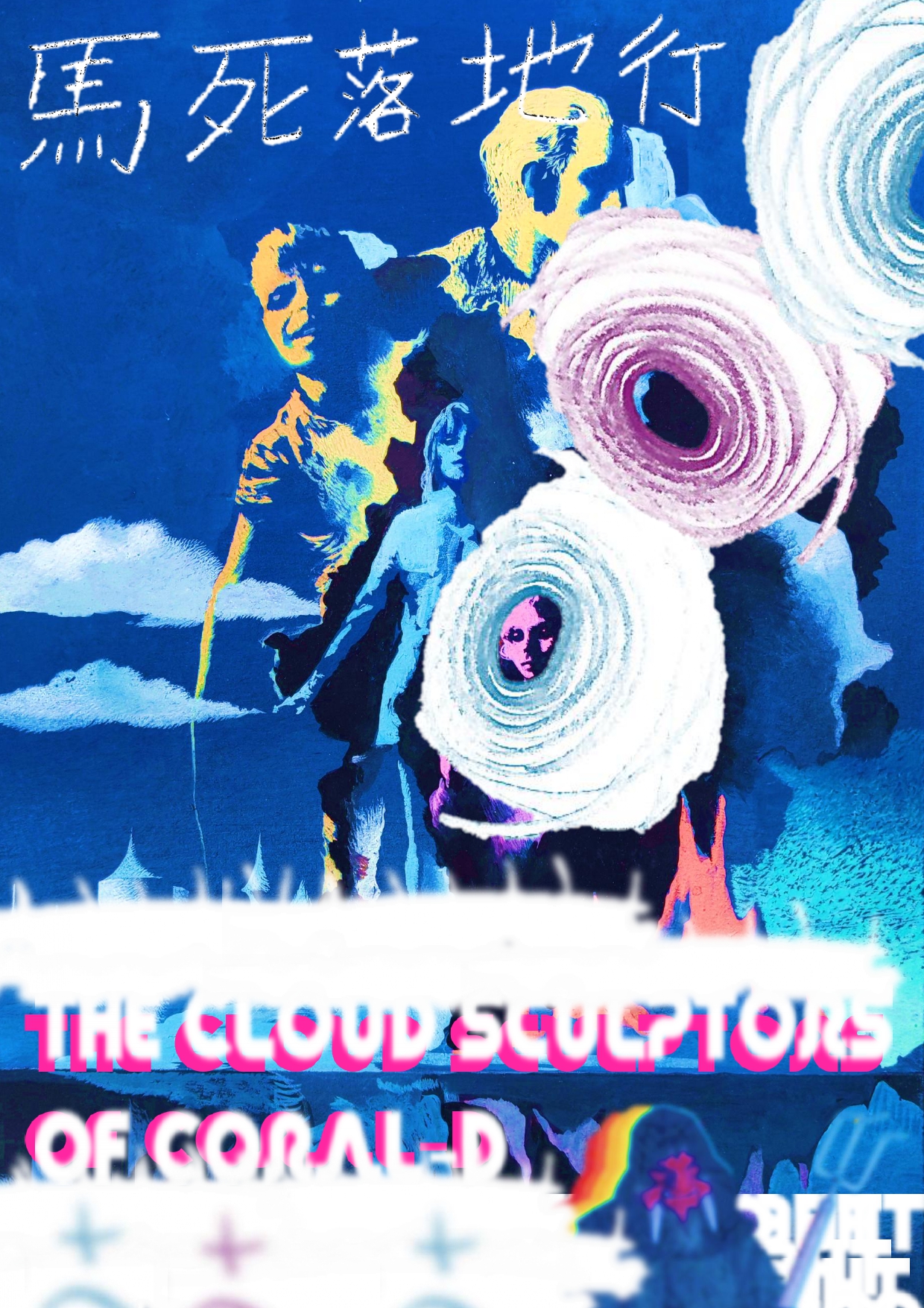
Prediction: After reading the first 2 pages, I’m gonna guess that the sculptors please the tourists/residents of Vermilion Sands [VS from this point on] with their cloud art, but there will be subtle, implicit pressure to take that art to the next level and one [or all] of them will perish in that attempt, and, of course, the art-viewers won’t give a shit. Or they’ll say, “oh no, how terrible,” then move on to the next new thing.
I don’t think the elites of VS will explicitly demand ‘more spectacle’, it will be overheard by the sculptors or already in their minds from living in that environment.
There may also be a discussion of ‘aesthetics’, the beauty + daring of sculpting ‘the heavens’ as if they are both challenging and offering a tribute to A GOD at the same time. This will parallel the sculptors themselves trying to pleasure the elites with their art and, as with the bored, absent god, they will be bored too. Or, perhaps a contrast: they are present, excited, but only temporarily.
Is that worse than boredom/absence?
+
‘Despite their uneasy rivalry, I realised that Van Eyck would give our group a useful dimension of glamour.’
Nice line, comfortable. None of the words are too high to reach for, yet ‘useful dimension of glamour’ is not a typical way to express this, specifically the ‘useful dimension’ part.
Ballard doesn’t over-write, but he doesn’t drain the text of all colour either.
[Based on the first three pages of this book].
+
‘He strutted around me like a pocket Napoleon.’
How tall was the French sulk exactly?
I guess the Napoleon here translates as ‘full of himself’, not ‘short ass‘. Or maybe a bit of both. It’s been a while since I’ve read this story now, but is he talking about the dwarf pilot?
+
It seems that cloud sculpting is the action of gliding in certain patterns through the clouds so as to make pretty shapes and sometimes abject portraits.
The narrator doesn’t explain how precisely this is done, but they’re so skilled at it that they can do sketches of celebrities like Leonora Chanel [that weep cold rain later on].
Leonora herself comes to watch, to reflect on herself as magnified sky-sign.
The satire is fairly obvious.
That the activity is seasonal is the funny part.
+
Actually, it is shown how it’s done [cloud sculpting].
Iodine crystal spray, to heat it up?
To make it sculptable, I suppose.
Are clouds in themselves not beautiful?
It’s a novelty.
Sometimes they sculpt to an empty highway, and that’s when the vice and the boredom set in. It’s only exhilarating if enough people are watching. And if Leonora Chanel is there, even better. Her eyes are worth more.
If Purple Muon Castle gets seen by Stephen King or Kathe Koja, is it brightened somehow? Would I re-read my own book [for the five hundredth time] to try to “feel” how Koja is reading it?
It’s half true.
Post-rejection/empty highway, I read my work with baleful eyes.
+
No more notes until the end of the story, or I’ll lose track of the original concept [pre-reading spec. vs post-read reality].
+
A child-death-skull weeping rain?
Nolan hates the people who watch his art, hates Vermilion Sands, hates himself?
+
How substantial are the transformed clouds?
Mona Lisa’s head is rolling across the desert floor, there must be some substance.
What if it hits a hated observer?
+
Leonora Chanel = Grace Kelly analogue, a darker version?
Void Garbo?
+
‘The fused silica on the surface of the lake formed an immense rainbow mirror that reflected the deranged colours of sand-reefs, more vivid even than the cinnabar and cyclamen wing-panels of the cloud-gliders overhead.’
‘Deranged colours’ + triple alliteration that includes two things far too technical for me to recognise or understand.
‘fused silica’ – beautiful scientific detail, just the sound of it alone.
All of the above allows the description to work so well, a comfortable narrator lethargically spooling out their observations.
And then, a line or two later, we’re in an inflamed landscape, with a thing like but not in reality an exhausted volcano.
+
I’m writing too much again.
I assume the standard of writing is maintained throughout and will only comment from now on if the style changes.
+
Dangerous storm-nimbus clouds.
Does Leonora Chanel wish them to die sculpting her volatile sky, in tribute to her ‘betterness’? Or as a sacrifice to…some THING?
Is it erotic for her in some way? < Crash vibes [published in 1973, 2 years after this]
I just noticed, perhaps only in this one instance, that the delineated objects are only vaguely placed e.g. ‘…the bizarre psychological studies in the bar and dining room by Dali and Francis Bacon.’
Also, ‘bar and dining room’ + ‘Dali and Francis Bacon’ mirror each other, not in syllable count but word count. Not sure why. Aesthetics? Cosy atmosphere?
I should remember this for my own work. When a character sees a room for the first time, it’s a maelstrom, and they are rarely a detective. There are various objects in that space, some stand out, others blur, and that’s it.
+
Did Nolan just rob Leonora or was it something else that made the alarm go off?
The whole paragraph is vague, nimbus-like.
+
A bizarre romance between the narrator and the secretary. Where did that come from? Writers in the 60’s and 70’s tended to do this, give their own avatar a pretty, young woman to play with. PKD did it in almost every novel, the big perv. Though sometimes the pretty woman turned out to be psychotic. And his avatar a slob.
+
Post-Reading-The-Story-Reality
Death count = 3 [possibly 4]
I think I’ve said most of what I wanted to say in these random notes I made while reading through [and am now typing up nine months later, completely unmoored from the original experience].
Leonora wanted ‘blood tribute’, was aroused by Nolan’s sense of self-destruction; to her, everything was Satanic dramaturgy holding Beauty the Corpse by the throat, dangling it [and partially herself] over the lip of a sloppy volcano.
Her villa wasn’t in VS; it was a slice of Hell on the fringes of it. Lagoon West, I think.
Is Ballard saying she is of the place or outside it?
Technically, she is a new implant to the territory, but isn’t that also true of most everyone living there?
Theory: Ballard has constructed VS, the place he ‘would like to live’, and is now peeling it apart, in certain spots, cos he can’t stand the people who infect it.
Or: the side characters, the secretary, the Major, Manuel, etc., are okay, but they operate in servile ways, either directly employed by Satan or trapped in communion with it.
To be fair, Nolan wasn’t that bad.
He could even be another aspect of Ballard, the aspect he wishes he could inhabit more of but can’t cos, at heart, he’s the Major.
A lot of projection here…
Maybe there are no analogues, no wishes.
And Ballard is just outside of the outside.
If that makes sense?
It did when I thought it [nine months ago].
+
How many stories should I do?
Maybe just read a page of each and see what grabs me.
But isn’t ‘grabbing’ just cheap tension?
E.g. ‘I was watching a rosemary plant bloom the day my grandmother died, again, for the fourth time that year.’
Bad example, I despise those kinds of lines…that are everywhere now…desperate so desperate to keep us beyond the first page, terrified that four-death-grandma might not be enough.
+
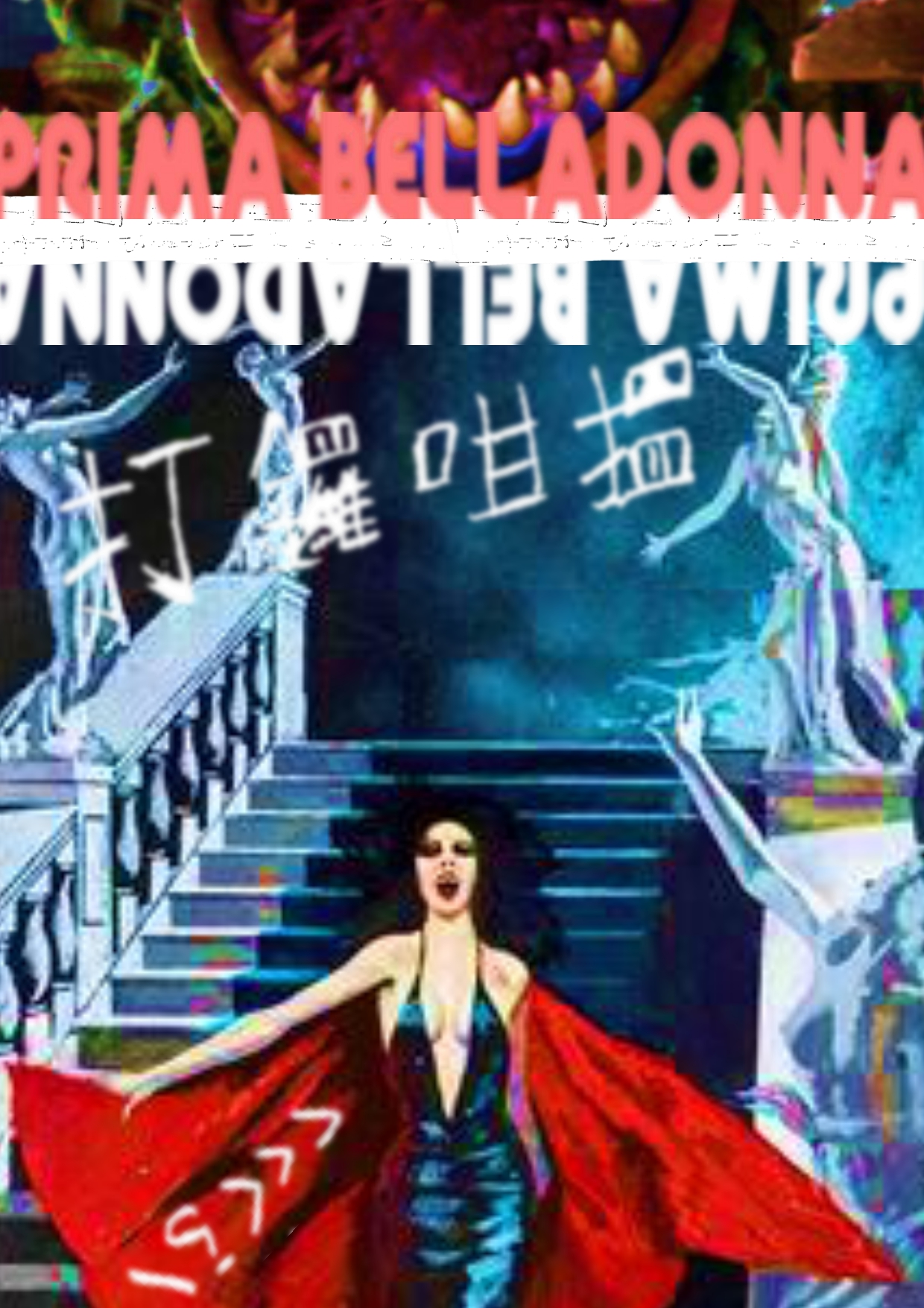
I’m gonna abandon the pre-read spec concept at the beginning of each story as I can’t do much with titles like Prima Belladonna.
I’ll just read through and make notes like I usually do.
Like I used to do before the YouTube channel.
That I’m easing back on now.
It’s exhausting.
+
+
‘…the Recess, that world slump of boredom, lethargy and high summer which carried us all so blissfully through ten unforgettable years…’
The Recess?
Apparently, a decade that was both a slump and high summer, no further details given.
High summer for the rich, a slump for everyone else?
Recess = break, long repose, but from what?
Even the terminology is intriguing, has a fierce contradiction at the heart of it. Unless you’re from wealth. Then there is no contradiction. Just words that vaguely allude to something, that sound pretty.
+
‘yarning in a desultory way and playing i-Go, a sort of decelerated chess which was popular then.’
The futurism is quite subtle, almost incidental.
And again, the contradiction, or, in the case of i-Go, a subversion of real chess, which is already pretty slow and is now even more so.
I assume that’s what Ballard means by ‘decelerated chess.’
+
The characters here seem middle-class, a kind of ‘have a job but don’t really need one’ type.
E.g. ‘Tony Miles sometimes sold a few ceramics to the tourists, but I usually put in a couple of hours in at the shop each morning…’
Is that covering rent?
Doesn’t matter.
VS is a chimeric place. If you happen to live there, you do solely that and nothing else, nothing survivalistic that normal people have to do.
I said at the start of this, where are the 97%, the workers, and it feels like, from what I’ve read so far, plus the description, that Ballard is forcing their existence by neglecting it i.e. the characters exist in an unreal realm that implies the workers are elsewhere, eliminated completely from this place Ballard would like to live, and when we the readers see these people lounging around without any cash worries, we think, hmm, where are ‘we’ in this world?
I suppose some of the side characters function as infiltrators, people sneaking in and trying to make a living from cloud sculpting or other service jobs that have yet to be shown.
Kind of like White Lotus, which I haven’t seen, or the first half of Triangle of Sadness, which I have seen [and done a de-con-struc of].
In the latter, the 2 model characters, especially the male, are the ‘working people’ who worry about cash, the Ballardian inside-outsiders, yet are still able to exist as passengers on the luxury yacht alongside the manure salesman and elderly British arms dealers and tech weirdo. They have money, but not ‘play money’, not capital, and are reliant solely on their looks, which will fade before long. And then where will they be? Cloud sculpting in Vermilion Sands? Hawking ceramic pots to tourists?
I’m not sure how critical I am or should be here, of Ballard, cos he is skewering the rich in some way [from the POV of a middle-class type]. I guess I just can’t help but wonder where he fits himself into all this.
+
The main trio of Prima Belladonna spies on a ‘poetic, emergent’ woman in the flat opposite.
‘“The approach has got to be equivocal,” Harry continued, gazing into his beer. “Shy, almost mystical. Nothing urgent or grabbing.”’
A lot of the dialogue is quite unpredictable. Or half of it is e.g. the 1st part of the above dialogue sounds typical, but the ‘nothing urgent or grabbing’ is unexpected in terms of word-choice, to use ‘grabbing’ as an adjective.
It adds a vat of personality to the characters, even if they’re all stuck in a 20 page story.
+
Of course, both Tony and Harry have wives.
+
Layers of the implicit: it’s not clear right away that this narrator is running a shop of musical orchids, but the clues are there.
It’s not hidden.
Ballard is a master of the implicit, or a servant of it. In The Cloud Sculptors of Coral-D, he didn’t explicitly say that Leonora Chanel wanted someone to die in the clouds, yet it was implied up to a certain layer. And left vague as to whether or not she wanted Nolan to be the one to expire.
In this story, it’s following the same trail.
Also, the specificity of detail in the character being some kind of futuristic botanist composer/engineer. It’s not just that Ballard renders him professional or expert in that world, but also imbues a degree of casualness to it. Many writers merely do the first part and then skip over the latter, more important bit.
The pacing, too, is very jazz-like, scenes drifting in tiny melodies, sometimes only a few lines like, ‘they played i-Go and drank cold beer, and she cheated.’ That’s not an exact replication of it, but close enough.
+
Is Jane a human-arachnid hybrid?
The orchid is a splice, artificially enhanced [I think] and appears to either be afraid of or attracted to her.
All the men in VS are infatuated.
Steve, the narrator, is like the arachnid, somewhere in between.
+
‘I wasn’t alarmed. It was that thirty years at Vermilion Sands had narrowed my horizons.’
Sounds like a suburb all right.
Or a retirement village.
Maybe Ballard is skewering himself, his desire to live in this kind of easy futuristic resort where no one does proper work and the plants “sing” Beethoven, what DOES it say about him?
That he just wants to black out the real world, the poor who surround/support it structurally, and fold himself into the quieter folds of his class. Or the lowest hem of that class, that he doesn’t truly belong to, but also does belong to, as the artistic nihilist, the acceptor of a comfort blanket with the blood of others he won’t think about much all over it.
Aren’t all writers/artists a slice of this same fear?
[No, only the privately educated British ones, they’re everywhere. Did you know Benedict Cucumber Patch once had a gun pointed to his head in South Africa? That’s his reference point of struggle, singular, it will never happen again].
+
I keep hammering this point cos it feels like a lot of artists got away with it in the past, and a lot of avant-garde artists now are trying to move on from Marxist/Anarchist politics and bury themselves in Tech-sludge futures and/or quantum philosophy cos there’s no place for them in the old ways, they have no experience of it, they don’t like it, are bored of it, whatever the reason is, I don’t know.
If Ballard were alive today, where would he stand?
Inside a deeper layer of nihilism?
+
Getting Audrey II vibes at the end with the giant orchid fucking/devouring potential hybrid, Jane.
Why does the narrator give up so easily?
‘“You’re a child of another world than this.”’
Could be an innate pessimism, mirrored by the Recess era [it’s explained a little more, an anarchist or limited Govt. decade, probably the latter seeing as the wealthy benefit from it in abundance], that nothing good in Vermilion Sands can last.
Or nothing ‘extraordinary’.
Vermilion Sands is always good, always comfortable.
+
Prima Belladonna is, overall, light and a bit forgettable.
Best part, probably the general haze enveloping it, and reference to The Recess, which could be a cousin-appendage of technocratic states that are all the rage again thanks to a peanut brain who doesn’t understand how communities work, only big governments and corporations and baby-feed subsidies.
This would make VS [this abbreviation looks increasingly odd, unsettling, Vermilion Sands from this point on] a refuge or respite from such chaos.
+
+
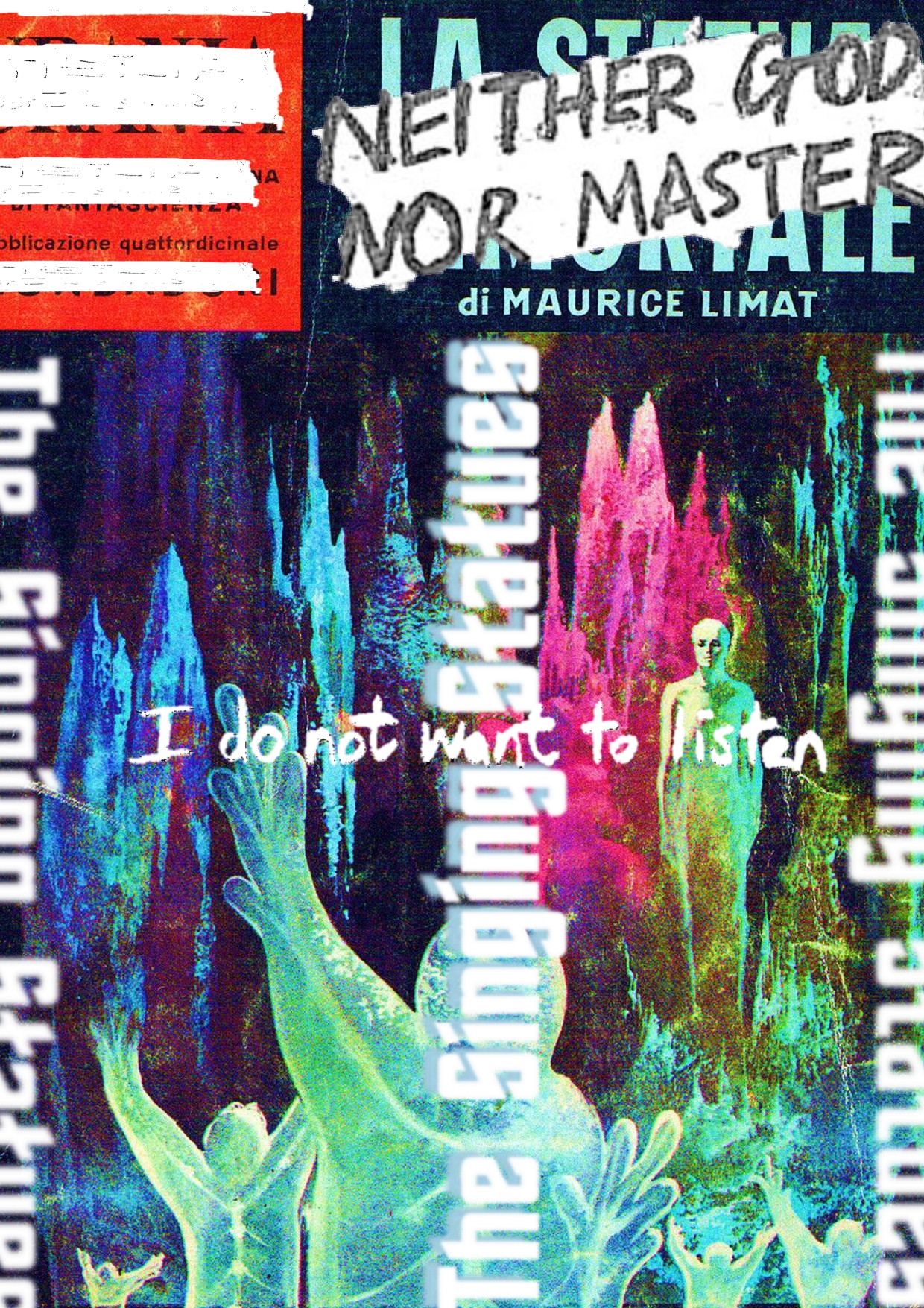
Skipping the slightly longer Screen Game for this one, which is only 16 pages. Not that I’m bored, I’m just tired of writing all these notes…having to write them [self-forced].
+
Some repeat in the singing-objects + a glamorous actress called Lunora who, like Leonora in The Cloud Sculptors of Coral-D, is compared briefly to Garbo.
‘…her strange flawed beauty, her fits of melancholy…’
Perhaps not a psychopath.
But this is Vermilion Sands, something dark and perverse has to slither in at some point.
+
Note: the commas in this whole collection come and go, sometimes missing between two adjectives like the line above [‘strange flawed beauty’], other times refusing to break up a conditional clause. There may be a pattern to it, or it may just be guided by easy whimsy, I don’t know and am too lazy to go through + check.
+
Lunora seems to be paired with the statues, as Jane was paired with the orchid, and Leonora with the Hell-clouds of Lagoon West. All women, all related to tourist-object novelties.
Plus, another narrator on the lower side of things, involved in the managing of those novelties, a clueless gatekeeper or possessor of a thing he does not truly understand.
He’s not working-class, but in this environment, it feels like he is the substitute for them.
Or perhaps he’s a native resident of the place Vermilion Sands used to be before it got sculpted into a playground for the wealthy?
That would be interesting.
What was Palm Springs before it became Palm Springs?
And before that, pre-colonisers?
+
‘…hunting the cheaper galleries in tourist haunts like Vermilion Sands…’
So, this place is a mix of rich + middle-class, with the rich out in Lagoon West?
Similar to Marbella perhaps?
+
The statues are at the ‘apogee of their abstract phase’ where they emit electronic bullshit. Nothing representational to their owner, as they were 10 years earlier.
I like this idea. Ballard mocking the trend of Hollywood in the 80’s? Or the cultural shift to post-modernism?
I have no evidence of either.
When was this written?
+
Copyright, 1971.
That’s a no then.
[Well, not to post-modernism, it’s still in that range].
It’s not really clear if Ballard disapproves of the ‘abstract phase’ [via the text], just that it’s not intimate or personal to an actress who may be made of metal herself.
Some irony in the idea of looking for companionship in the artificial sounds of a metallic statue, if she’s not made of metal.
If metal, it all makes sense, psychologically.
We’ll see.
+
Ah, the fused silica is a sheet of material allowing residents to walk out onto the surface of the lake.
Would look good in a film.
Has anyone tried to adapt Vermilion Sands before?
+
Dali again, further repetition, rich people with the same tastes, all living out there in the figurative silica of Lagoon West.
+
Narrator getting creepy, infiltrating Lunora’s psyche via the singing Zero Orbit Statue, watching her sleep, perving on her hair-covered breasts.
+
Is this a futuristic, sleazier version of Cyrano de Bergerac?
Don’t think it’s gonna end well.
+
Appears that you can just watch the wealthy in their lakeside palaces as they do absolutely fuck all, no security, no perimeter detection grids with decapitating laser turrets.
Maybe a trade-off of some kind, or an implicit command to be observed, desired, even at close range.
+
I wrote a similar place to Vermilion Sands in my epic novel Void Galaxia, only it was called Lake Arrowhead [a real place in Cali], and the futuristic element was a kind of VR arcade where you could enter a simulated copy of the same location you were already in, just so you could fuck a celebrity, or torture them, or both, and it was possible to do that cos some of the celebrities authorised their own likeness for the game.
+
Turns out the statues use a sand reef based sonic sculpture [natural, I assume] as a core and are then sculpted into a familiar melody.
Lunora thought of the statue as a mirror to herself, a misty replica she could love.
The psychology behind that?
Her films did well after she had plastic surgery, so she wanted to love a beauty beneath that, something [almost] natural?
The narrator’s voice had nothing really to do with it, as he hoped it did. In fact, she trashed the statue after hearing his confession tape.
Brutal.
Did Ballard have some awful experience with Great Garbo or Grace Kelly in real life?
+
For all the characters in Vermilion Sands, natural beauty is not enough.
Colonisers need to imprint their own aesthetic standard on top/inside of it.
The original remains, reduced, melancholic.
Is Ballard commenting on this?
Not explicitly, as in direct judgment from the narrator, but maybe through vibes or aura, who knows?
+
+
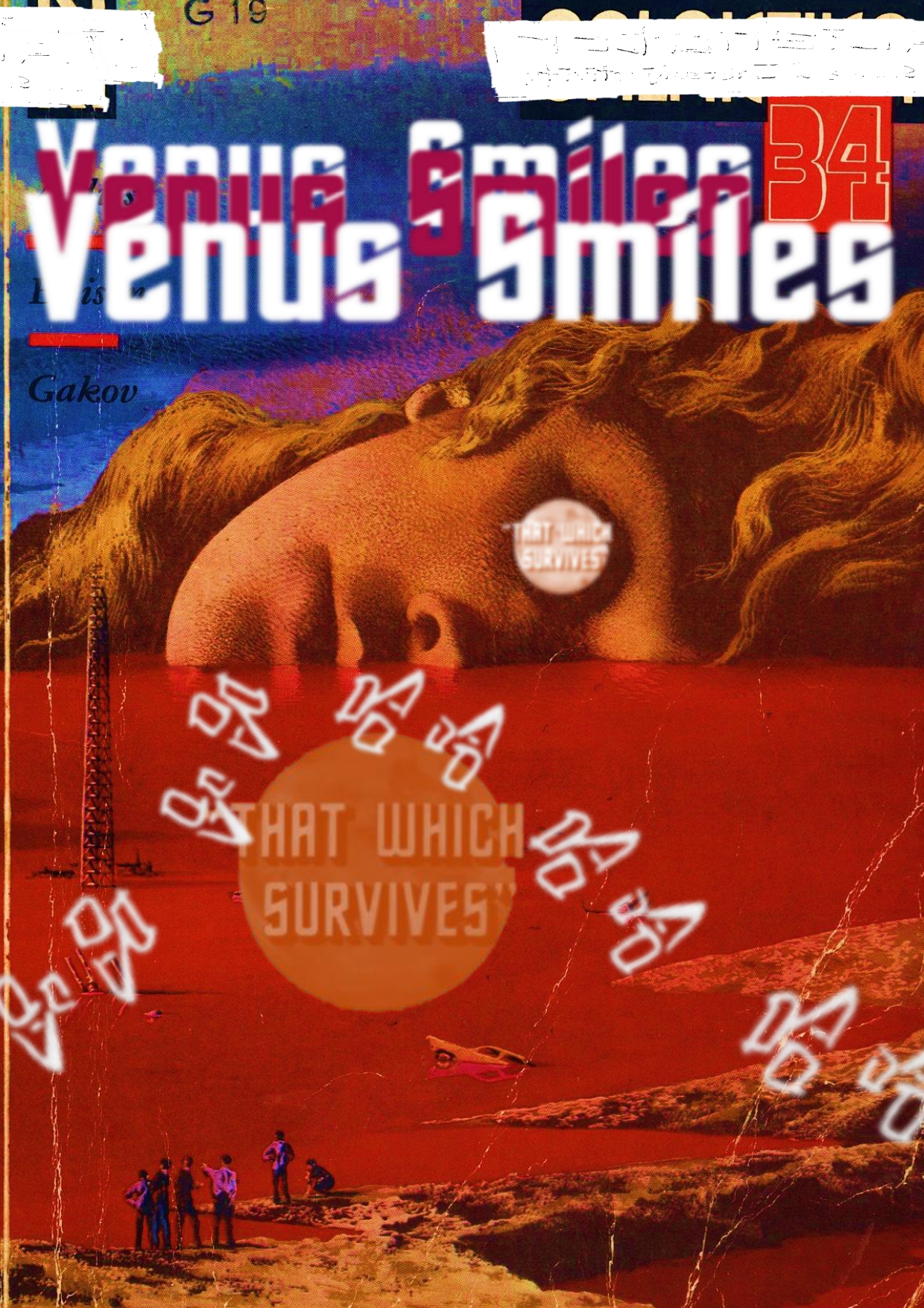
Another shorter story, 16 pages, cos I’m running low on energy/motivation. Not Ballard’s fault, more the process of note-taking while reading. No matter how many times I say, okay, no more notes, just read through to the end, then write something…it just doesn’t hold.
In fact, the first line of Venus Smiles even has ‘notes’ in it. ‘Low notes on a high afternoon.’ Another musical story?
Another female character with an ‘L’ name.
Another nomadic statue [that disappoints].
Red Beach is a rival resort? It’s consistently referenced.
All the artists appear to be in rebellion to their customers/patrons/wealthy psychopaths.
Their work is a slap in the face.
+
‘We drove back to the office in a thin silence.’
THIN!
+
‘Eyes like black orchids.’
Each instigator in each story has a creature of some sort in their eyes.
Gives an alien aspect to things.
NO MORE NOTES.
READ.
+
Finished.
This is a spiritual twin to Trash F-Log, a sonic statue reconstituting its rust particles into new limbs and rehashed hack classics.
A metaphor for Vermilion Sands?
The narrator is a wealthy socialite on the Fine Arts Committee. He knows fuck all about art, relates to the Medici Family. A brand-new aesthetic form grows out in his back garden and he dismantles it cos of the incessant din. This dredges up beauty from the abjected. He would take apart the silicon creature from The Devil in the Dark, for the sake of the community that ruins everything on a whim and who’s uncomfortable enough to stop that? Not this guy on the Fine Arts Committee. Lorraine Drexel maybe, the artist. She dumped Mystics in Bali in the Town Square and let it enquire. Sued the narrator for vandalism, breaking it apart. But it came back, in a regressive form, planted into the buildings all across Vermilion Sands. You cannot beat Trash F-Log. It’s what people want to watch on some level cos it’s a mess, has some heart/viscera to it.
This isn’t really a horror story, more like a coming-of-age. Vermilion Sands possesses some personality now, some history for later generations to exaggerate.
+
+
‘No one ever comes to Vermilion Sands now…’
A future that Ballard would like to live in was actually, already, a relic of the past, a feeling that has been carried all through this collection.
Is it that he knew any future utopia/dystopia written about in 1971 would quickly become obsolete, just like the 1992 of Ubik?
Tender is the Night comes to mind, diving off a platform into the ocean not so beautifully as you did 10 years before.
+
The Recess is mentioned again, a marker for when Vermilion Sands started to resemble ‘an abandoned amusement park.’
+
Why is this described as a vision of the future as it really will be, when it’s already turned to dust [in-narrative]?
Ballardian irony.
The one prescient fragment is that the wealthy will continue to be perverse, bored, murderous, despicable on a level we can all relate to, only they’ll probably move on and do it elsewhere.
On Ceres perhaps? Or a space yacht?
In Planet Rasputin, I also dirty the anarcho-communist future presented cos I have no interest in writing utopias, don’t really believe in them. Much more useful to point to possible fractures, so that they may be avoided. Or followed through on and then regretted afterwards.
+
1000 Dreams of Stellavista is the last story. I’ve skipped several to get to it, so I may go back and just read the others first, then return with my loyal pen for this one.
I fear that I’ve missed something.
Or maybe 1 story alone was sufficient?
There is quite a bit of repetition in the 4 stories I’ve looked at so far. All the narrators have a similar vibe, most of the object-women characters possess ‘L’ names and eyes with creatures or plants inside them.
Is Vermilion Sands just one large resort town of retrograde sameness?
+
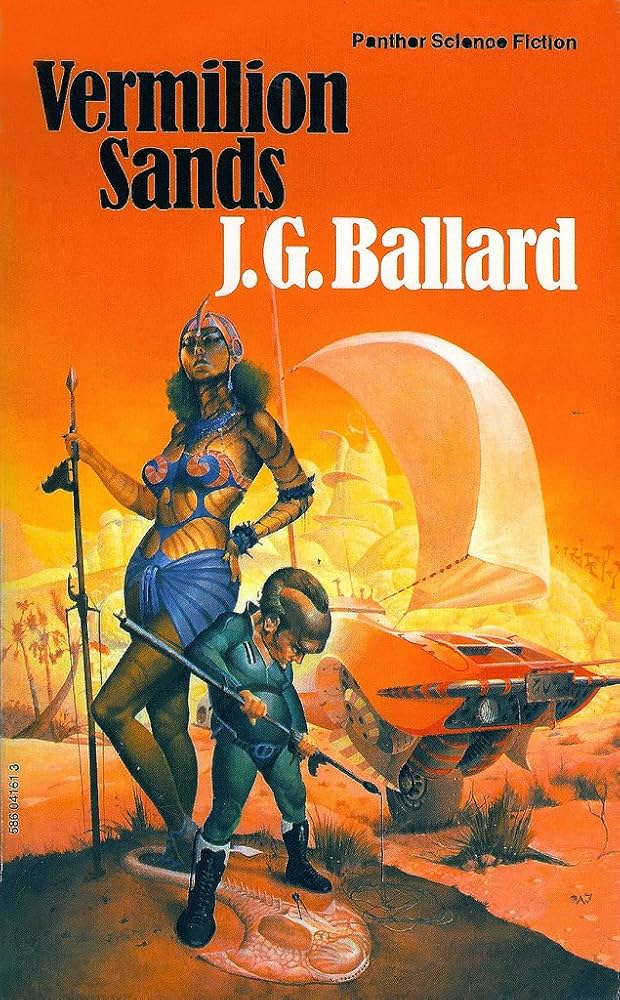
Just had a thought [while staring at the jewelled metal claw on the cover of Vermilion Sands]: Ballard’s other novel I read was set on the Thames, High Rise was also British, yet Vermilion Sands is egregiously American.
Was Ballard a critic of the US?
Did he ever live there?
If he didn’t, did it feel [to him] like he did?
American culture permeates the whole world, fingers capitalism into unsuspecting brains, suffocates us with-
+
This is re-territorialising my reading of the text now, fused with the idea that it’s already a perished future state that perhaps he doesn’t want to live in after all.
+
According to wiki, he wrote Passport to Eternity in the late 50’s, and that was a pastiche of the American sci-fi genre at that time; pastiche implies affection for, but maybe there’s an inner disgust too, the self-awareness that the US cultural machine is an overwhelming and deceitful and ultimately debilitating beast?
He WOULD like to live there and that is disgusting to him [on some level – overused in this de-con-struc but necessary, perhaps even thematic]
+
I’m losing interest/energy.
Just seen Medea again.
Another ‘L’ woman on the way?
+
The problem is: I’m not a fan of the short story form. Feels anaemic somehow. None of it truly sticks. Vermilion Sands has the connective tissue of Vermilion Sands the Resort Town Perverted Utopia, but it’s not enough to keep me in.
I just don’t care.
+
I’ll try and finish this last story – Stellavista – then leave some more notes.
+
An automobile stylist?
Robert Vaughn, doctor?
+++
Vermilion Sands is in my local library and maybe Palm Springs. It’s worth checking out if you want to see how authors in the 70’s saw the future panning out.
+++